
 Blog
BlogA gate should do more than look impressive at the entrance to a Cheltenham home or business. It should control who enters, protect vehicles and people, and work reliably when the weather is poor or the site is busy. Professional electric gate installation and automation in Cheltenham turns a manual boundary into a practical first layer of security, with access designed around how the property is actually used.
For a private driveway, that may mean opening the gate safely from a vehicle or checking a visitor through a video intercom. For an industrial yard, apartment development, office, or healthcare site, it may mean controlling staff, deliveries, contractors, and out-of-hours access without leaving the entrance unsecured. The right answer is rarely a standard package. Gate design, available space, traffic levels, ground conditions, and the people using the site all matter.
Start With the Entrance, Not the Automation
The first decision is whether the gate itself is suitable for automation. A well-built gate that moves freely by hand gives an operator the best chance of performing reliably over time. If a gate drags, binds, is out of alignment, or has worn hinges, adding a motor will not solve the underlying problem. It can create premature wear, unreliable operation, and unnecessary safety concerns.
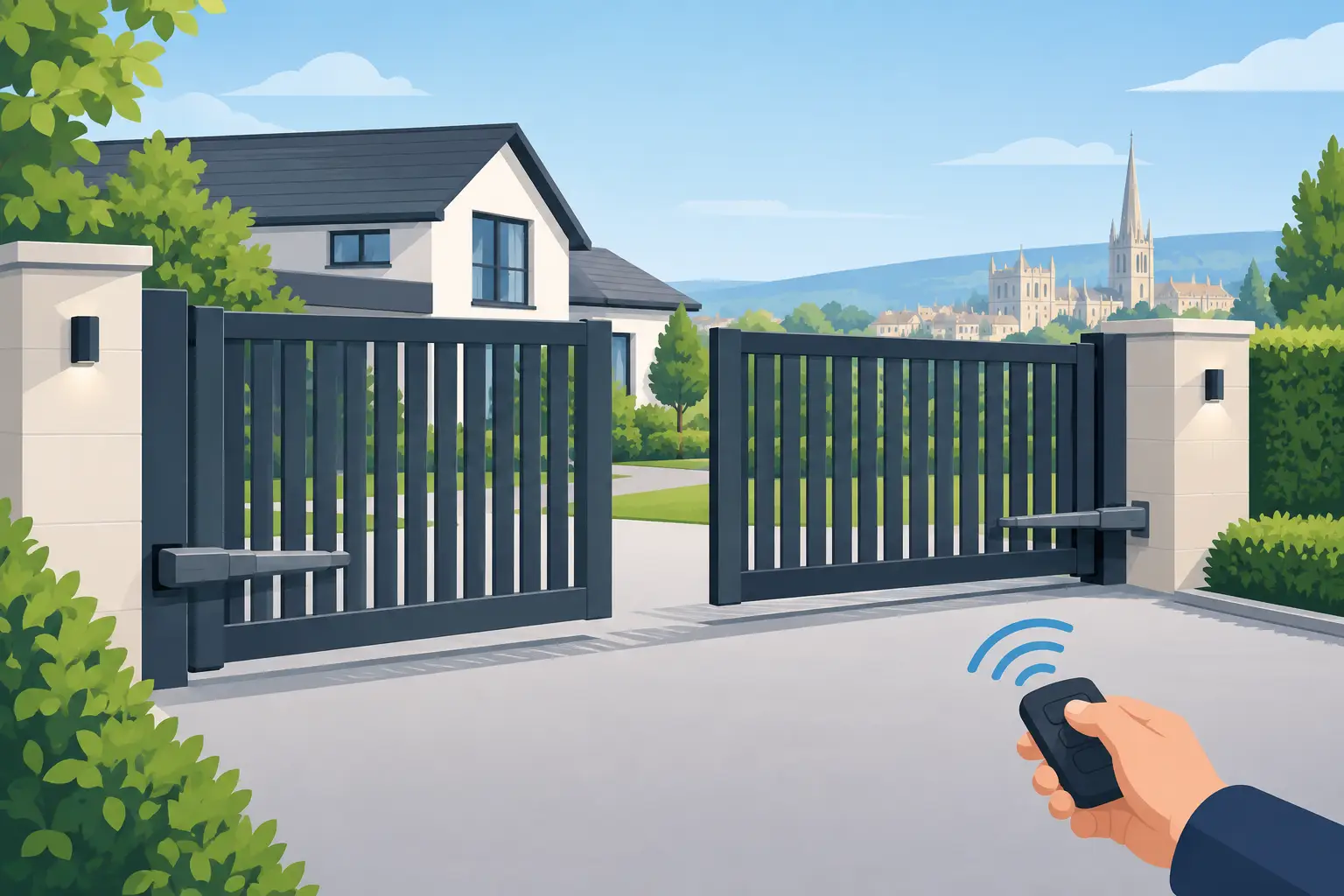
Swing gates are a common choice for residential entrances where there is clear space behind the gate to allow leaves to open. They can suit traditional properties particularly well and are available in timber, steel, aluminum, and composite styles. However, a sloped driveway, limited opening area, or heavy gate leaf may affect the type of operator required.
Sliding gates are often the better option where space behind the entrance is limited or where a wider opening is needed. They can work well for commercial yards, managed parking, and properties close to the road, provided there is sufficient run-back room beside the opening for the gate to travel. A tracked sliding gate and a cantilever design have different site requirements, so the ground, drainage, and daily use should be assessed before a decision is made.
An experienced installer will also consider sightlines. A gate should not force a driver to stop in an unsafe position, obstruct visibility when leaving the property, or create a pinch point for pedestrians. These details are as important as the motor selected.
Choosing the Right Gate Automation
Gate automation is not simply a question of fitting an electric motor. The operator must be correctly sized for the gate’s weight, length, wind exposure, opening frequency, and operating environment. A light residential gate used a few times each day has different requirements from a commercial entrance handling staff vehicles, deliveries, and visitors throughout the day.
Underground operators can preserve the appearance of a swing gate because most of the mechanism is concealed below ground. They are often chosen for higher-end residential entrances, but drainage and access for future servicing must be planned carefully. Above-ground ram or articulated-arm operators are more visible, yet can be an excellent practical choice where service access and reliability are priorities.
For sliding gates, a rack-and-pinion motor is typically positioned alongside the opening and drives the gate along its path. The motor, track or cantilever hardware, safety devices, and control equipment must work together. Established automation manufacturers such as BFT, CAME, DEA, and FAAC offer options for different gate sizes and duty levels, but the best equipment is only as good as the survey, installation, and setup behind it.
A professional proposal should explain what is being supplied and why. It should cover the gate operator, control panel, safety equipment, access devices, cabling, power supply, and any required groundwork. This prevents the common problem of comparing quotations that appear similar but include very different levels of safety, finish, and long-term support.
Safety Is Part of Every Proper Installation
An automated gate has moving parts and significant force behind it. Safety cannot be treated as an optional upgrade. A correctly designed system uses appropriate safeguards to detect people, vehicles, and obstructions, then stops or reverses movement when necessary.
Photocells are commonly used to create a protected beam across an entrance. Safety edges can be fitted to areas where there is a risk of trapping or crushing, such as the leading edge of a sliding gate or between swing gate leaves and nearby fixed structures. The gate’s force settings, travel limits, and emergency release arrangement also need careful commissioning.
The exact safety measures depend on the gate type and its surroundings. A gate near a public footpath, a school route, a shared residential entrance, or an active loading area may need more extensive protection than a private driveway with limited access. The goal is straightforward: the gate should be secure without creating avoidable risk for residents, visitors, staff, or passersby.
Regular checks matter after installation as well. A gate can become less safe when hinges move, tracks collect debris, photocells are damaged, or landscaping changes the area around it. Maintenance identifies these issues before they become a breakdown or a hazard.
Access Control That Fits Your Property
The most useful automated gate is easy for authorized people to use and difficult for everyone else to bypass. Remote controls remain a convenient option for many homes, while keypads allow residents, cleaners, tradespeople, or delivery drivers to enter using a code. Codes should be changed when occupants or staff change, particularly at rental and commercial properties.
Video and audio intercoms give the person inside the property the ability to speak with and, where appropriate, see a visitor before opening the gate. For homeowners, this adds reassurance when a caller arrives after dark or when children are at home. For offices, healthcare facilities, and managed sites, it creates a clear point of communication at the perimeter.
Larger sites may benefit from access control using fobs, cards, mobile credentials, or Paxton-based systems. These options can provide more control over who can enter and when. A facilities manager may want staff access during scheduled hours, restricted areas for contractors, and a simple way to remove credentials when someone leaves. Where vehicle traffic is heavy, a car park barrier may be more appropriate than a full gate at certain entrances, or it may work alongside gates to manage different lanes.
Remote operation is also worth considering, but convenience should not override security. A system should be configured so that users have only the access they need, and the property should retain a dependable method of entry during a power interruption. Battery backup, manual release procedures, and the needs of emergency services should be discussed during the design stage.
Why Local Site Knowledge Makes a Difference
Electric gate installation and automation in Cheltenham often involves properties with individual layouts, from period homes and narrow approaches to modern developments, retail premises, and industrial estates. Ground levels, drainage, exposed locations, stone pillars, existing walls, and older electrical supplies can all affect the work required.
A thorough site survey looks beyond the gate opening. It checks the route for power and data cabling, the location of intercoms and keypads, drainage around underground equipment, the condition of posts and piers, and how users approach the entrance. It also considers whether CCTV coverage would improve the overall security plan. A camera positioned at the gate can provide valuable visibility of visitors, vehicles, and activity around the boundary, especially when integrated with an intercom or monitored from a suitable device.
For landlords and property managers, consistency is especially valuable. A single security specialist can coordinate gate automation, intercoms, CCTV, alarms, and access control so systems are easier to operate and maintain. Rather than adding disconnected equipment over time, the property gains a considered access and security arrangement.
Maintenance and Repairs Protect Your Investment
An automated gate is exposed to rain, dirt, temperature changes, vehicle impact, and everyday use. Even high-quality equipment needs attention. Tracks should be kept clear, moving components inspected, safety devices tested, and controls checked for correct operation. A maintenance visit can also identify worn rollers, loose fixings, damaged cabling, or a gate that is beginning to fall out of alignment.
If an existing gate becomes slow, noisy, intermittent, or fails to close correctly, avoid repeatedly forcing it through cycles. The fault may be mechanical, electrical, or related to a safety device, and continued use can worsen the issue. Professional repair is particularly important where the gate protects a business entrance or a shared property, because a gate stuck open can quickly compromise security and operations.
With 37 years of security installation experience, JP Security can assess new installations, upgrades, and faults across established gate and access-control equipment. The right starting point is a free consultation that considers the entrance, the people using it, and the level of protection required.
A well-planned automated gate should feel simple every day: authorized visitors can enter safely, your boundary remains controlled, and you have confidence that the first point of access to your property is working as it should.
