
 Access Control
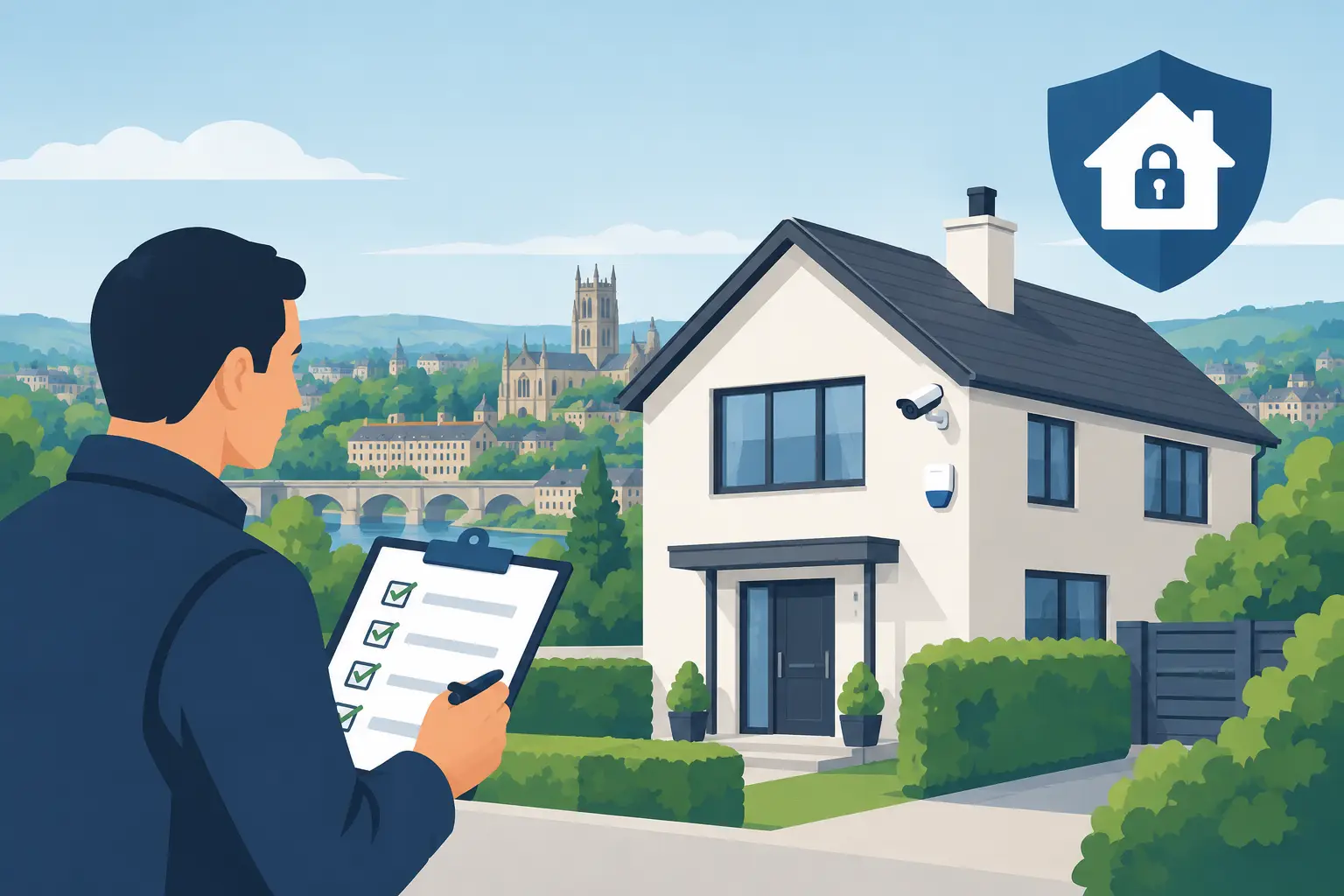
A home security risk assessment in Cheltenham and Gloucestershire should start at the property boundary, not with a camera catalog. The question is not simply whether you have an alarm or CCTV. It is whether someone can approach, enter, move through, and leave your home without being seen, challenged, or recorded. A well-planned assessment turns that question into practical protection for your family, possessions, vehicles, and peace of mind.
Every home has different exposures. A detached property with a long drive has different priorities from a townhome with rear access through an alley, while a rental property may need simple systems that are easy for tenants to use. The most effective solution is usually a combination of visible deterrence, reliable detection, controlled entry, and clear evidence if an incident occurs.
Start with how someone reaches your home
Walk the route an unwanted visitor would most likely take. Begin at the street, driveway, side passage, rear garden, garage, and any shared access point. Look for features that make approach easier: low side gates, unlit paths, dense shrubs around windows, blind corners, detached garages, or fences that provide cover once a person is inside the boundary.
This is where a risk assessment avoids a common mistake: placing security equipment only where it is easy to install. A camera above the front door may capture a delivery or visitor, but it will not necessarily cover the side gate, parked vehicles, or the route to a rear patio door. Equally, an automatic gate can improve control of a driveway, but it should not create a false sense of security if pedestrian access remains open at the side.
At this stage, consider the quality of existing lighting. Motion-activated lighting can discourage opportunistic behavior and improve camera images at night. It needs careful positioning, though. Lights aimed into a neighbor’s property, directly at a camera lens, or triggered constantly by passing traffic can become more of a nuisance than a safeguard.
Assess the doors, windows, and other entry points
Most residential security decisions come down to protecting the points where entry is realistic. Front, rear, patio, and garage doors deserve attention first, followed by accessible ground-floor windows, roof extensions, basement access, and doors linking the home to an attached garage.
A professional assessment looks beyond whether a door is locked. The frame, hinges, glazing, letter plate, cylinder, and visibility from the road all affect risk. Patio doors can be vulnerable where the rear of the property is concealed. A garage may contain tools that could be used to force entry elsewhere, as well as bicycles, power equipment, and access to the house itself.
Wireless alarm systems are often particularly suitable for established homes because they can provide door, window, motion, and shock detection without major disruption to décor. The right devices depend on the layout. A family with pets may need pet-aware motion detection or a different combination of perimeter sensors, while a large open-plan area may require carefully positioned detectors to avoid gaps and false alarms.
An alarm should be easy to set every day. If the system is complicated, inconvenient, or prone to unnecessary activations, people stop using it properly. That is why system design matters as much as the equipment itself.
Home security risk assessment in Cheltenham and Gloucestershire
Properties across Cheltenham, Gloucester, Tewkesbury, and the wider county vary widely in age and layout. Period homes may have multiple access points, outbuildings, and older doors or windows. Newer developments can have open frontages, shared parking areas, and limited natural privacy. Rural homes may have long approaches, isolated garages, workshops, and a greater need to monitor gates and vehicles.
A local home security risk assessment should account for how the property is actually lived in. Do children arrive home before adults? Does a cleaner, dog walker, contractor, or tenant need limited access? Is a vehicle left on the drive overnight? Are valuables kept in a shed, garage, home office, or garden building? These details influence whether the priority is an alarm, CCTV, a video intercom, gate automation, access control, or an integrated system.
For example, a family home with frequent deliveries may benefit from a video intercom at the gate or front entrance. You can see and speak to a caller before opening the door, rather than relying on a locked front door alone. For a property with a private drive, automated gates can add a physical and visual barrier, while cameras provide visibility of arrivals and departures.
Make cameras work as evidence, not decoration
CCTV is most useful when it records usable footage of the right areas. That means considering camera height, angle, lighting, lens choice, and likely direction of travel. A camera positioned too high may show that someone was present without providing a clear image of their face. One pointing across a driveway may be useful for vehicle activity but miss the person approaching a side door.
The most valuable coverage commonly includes the front entrance, driveway, side access, rear garden, garage, and any detached building that holds valuable equipment. It may not be necessary to cover every inch of a property. In fact, a smaller number of correctly specified cameras often performs better than a collection of poorly placed units.
Remote viewing can offer reassurance when you are away, but it is not a substitute for proper positioning, secure recording, and professional setup. Check that footage is retained for an appropriate period and that the system can be accessed safely. Password management, software updates, and secure network configuration matter because a camera system connected to the internet must be protected as carefully as any other connected device.
Cameras should also respect privacy. Avoid unnecessarily recording neighboring gardens, windows, or public areas. Where a camera does capture areas beyond your boundary, seek appropriate guidance on your responsibilities and use clear signage where needed.
Control who can enter and when
Security is not only about keeping intruders out. It is also about making entry simpler and safer for the people you trust. Video and audio intercoms allow you to verify callers before granting access. Electric gates can prevent casual vehicle access to a drive, while coded keypads, fobs, and access control can reduce the need for spare keys.
There are trade-offs. Gates require reliable safety features, regular servicing, and a plan for power interruptions or emergency access. Intercoms are highly convenient, but the call point and gate release must be placed and installed so they cannot be easily bypassed. Access credentials should be removed promptly when a contractor, tenant, or employee no longer needs them.
For larger homes, converted properties, or managed residential sites, a system that records access events can provide useful accountability. For a typical single-family home, straightforward controls that every household member understands may be the better choice.
Do not overlook network and power reliability
Modern alarms, cameras, intercoms, and remote viewing systems rely on dependable infrastructure. Weak Wi-Fi at a detached garage, poor-quality cabling, overloaded internet equipment, or an unprotected power supply can undermine otherwise excellent security equipment.
A proper assessment should identify where cables can be run discreetly, whether wireless signals will remain dependable through thick walls, and how equipment will continue to operate during a power or broadband interruption. Wired solutions can be an excellent choice for new builds, major renovations, and outbuildings. Wireless systems can be faster and less disruptive in finished homes. Neither is automatically better – the property and the required level of resilience should decide.
Turn findings into a sensible priority plan
Not every improvement needs to happen at once. Once risks have been identified, separate essential work from useful future upgrades. Start with gaps that allow easy access or leave the property unprotected when occupied or empty. Then consider improvements that add convenience and wider visibility, such as driveway CCTV, video intercoms, or gate automation.
A clear proposal should explain what each recommendation does, where it will be installed, and why it suits the property. It should also account for future needs. If you expect to add cameras, automate gates, convert a garage, or build a garden office later, choosing an expandable system can prevent unnecessary replacement costs.
With 37 years of experience, JP Security approaches assessments as a practical design process, not a one-size-fits-all equipment sale. The aim is to give you clear control over who approaches your home, who enters it, and what happens at the times you cannot be there.
The best time to assess home security is before a concern becomes an incident. Walk your property with fresh eyes, note the routes and blind spots that make you uneasy, and speak to an expert who can turn those observations into protection that fits the way you live.
