
 Blog
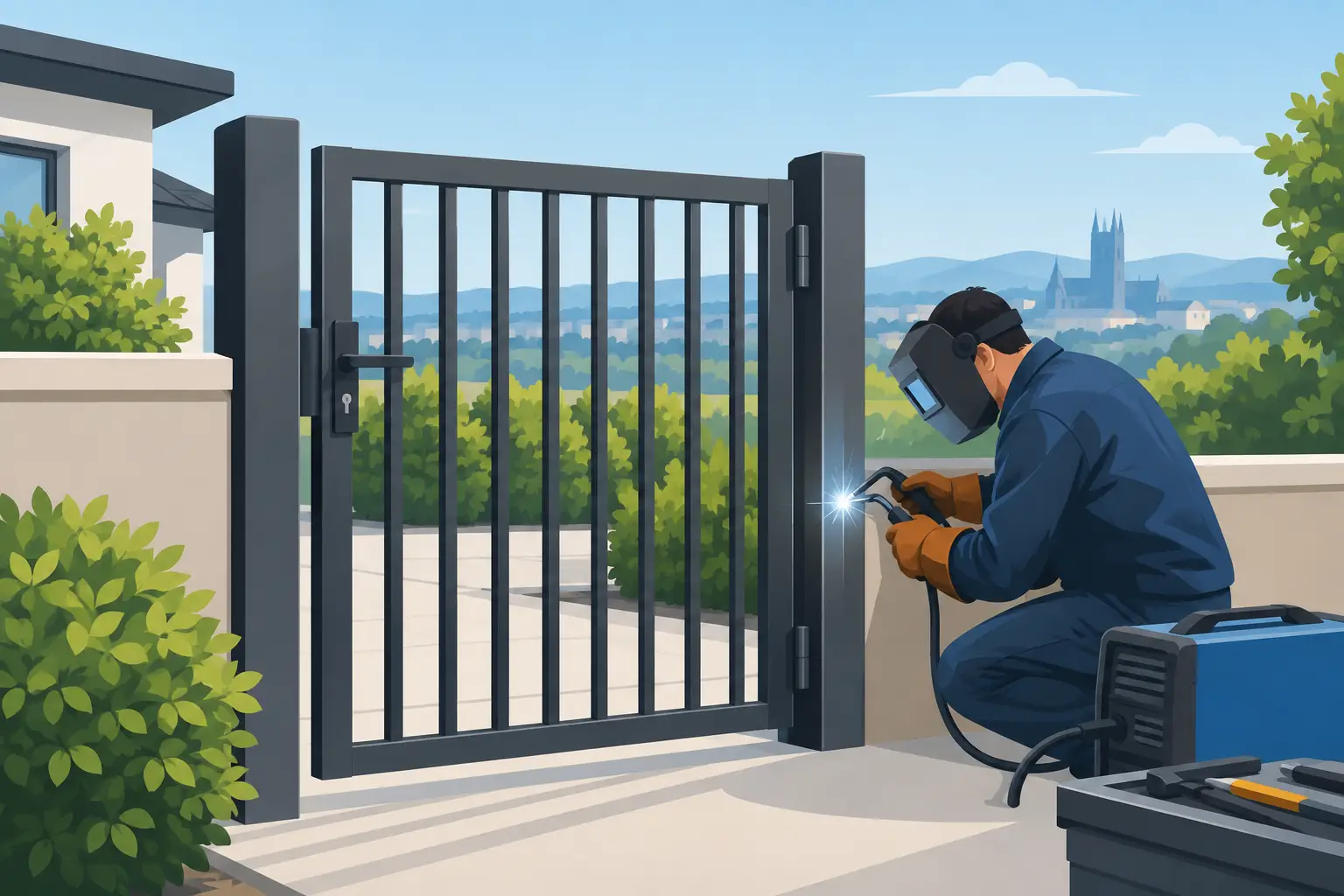
BlogA pedestrian gate is often the first physical boundary a visitor, delivery driver, tenant, or intruder encounters. When searching for metal pedestrian gate fabricators in Cheltenham and Gloucestershire, it pays to look beyond appearance. The right gate should suit the property, resist daily wear, create a clear point of entry, and work properly with the access controls that protect your home or site.
For a private driveway, a side passage, a school boundary, or an industrial yard, the best result comes from treating the gate and the security system as one planned solution. A well-made steel gate can last for years. Yet its day-to-day value depends on practical details: where it sits, how it latches, who can enter, how visitors call for access, and how the gate performs in poor weather.
Choosing metal pedestrian gate fabricators in Cheltenham
Fabrication is not simply a matter of welding a frame and fitting hinges. Every property has different levels, boundary lines, traffic patterns, and security concerns. A gate for a townhouse in Cheltenham may need to provide privacy without making a narrow entrance feel enclosed. A gate at a commercial property in Gloucester may need to withstand frequent staff access and support a controlled entry policy.
Start with the purpose of the gate. Some homeowners want to prevent opportunistic access to a side or rear garden. Landlords may need a durable communal entrance that gives residents straightforward access while limiting unapproved visitors. Businesses often need to separate public areas from delivery zones, staff entrances, storage areas, or parking facilities.
A capable fabricator should ask about those uses before recommending a design. That conversation should cover the opening width, ground conditions, desired gate height, visibility through the design, the direction of swing, and the location of adjoining walls, fences, and posts. It should also address whether the gate will be manually operated now or automated later.
Design starts with the boundary, not the catalog
There is no single “best” pedestrian gate. A solid-panel metal gate may offer greater privacy, but it can reduce visibility around an entrance. Open railings or mesh can help staff see who is approaching, although they may not provide the same level of screening. Decorative steelwork can complement a period property, while a simple powder-coated steel design is often a sensible choice for a practical commercial boundary.
The material finish matters as much as the design. Exterior metalwork in Gloucestershire needs protection from rain, frost, and changing temperatures. Galvanized steel and a quality powder-coated finish are common options for reducing corrosion and keeping maintenance manageable. The location also matters. A sheltered garden entrance faces different demands than a gate beside a busy road, near trees, or exposed to standing water.
Hinges, posts, latches, and closers deserve equal attention. A strong gate panel will not solve a weak post installation or an unreliable latch. If the gate needs to self-close for safety or security, the closer must be suited to its weight and expected use. A gate that is difficult to open, slams shut, or drags across the ground will quickly become a source of frustration and may be left unsecured.
Match access control to the people using the gate
A fabricated gate provides the physical barrier. Access control determines how that barrier is managed. This is where many property owners can gain far more convenience and control than a key-only arrangement allows.
For a home, a video intercom allows residents to see and speak with a visitor before releasing the gate. This can be particularly useful for side entrances, gated gardens, and properties where the front door is set back from the boundary. App-based options can also allow authorized access when no one is physically at home, depending on the system selected and the property’s connectivity.
For managed residential and commercial sites, keypad entry, proximity fobs, cards, and Paxton access control can make permissions easier to manage. Instead of collecting keys when staff leave or tenants change, an administrator can remove or update access credentials. This creates a clearer record of who should be able to enter and helps reduce the risk associated with lost keys.
The gate hardware must be selected around that system. Electric strikes, magnetic locks, gate release buttons, emergency exit devices, and intercom equipment all need correct positioning and suitable cabling. Planning these components before fabrication is usually cleaner and more cost-effective than trying to adapt a completed gate afterward.
Do not overlook safe exit and emergency access
Security should never prevent people from leaving safely. A pedestrian gate at a workplace, medical facility, apartment block, or shared yard must have an appropriate exit arrangement for the people using it. This may involve a manual release, a push-to-exit control, a fire alarm interface, or another solution appropriate to the building and its risk assessment.
Emergency services and maintenance teams may also need reliable entry arrangements. A professional design discussion considers these needs early, rather than leaving them as a last-minute compromise. The objective is controlled entry without creating an unsafe or impractical route out.
Questions to settle before requesting a quote
A clear quote depends on a clear brief. You do not need technical drawings before speaking with a fabricator or security installer, but knowing a few basics will make the consultation more productive. Consider who uses the entrance each day, whether deliveries need access, whether the gate should close automatically, and whether you need visitor communication or remote release.
It is also useful to decide what level of privacy you want. A gate that blocks sightlines may be right for a domestic side access. At a business entrance, visible lines through the gate can support CCTV coverage and allow reception or security staff to assess approaching visitors. The best choice depends on the site rather than a standard rule.
Ask who will coordinate the civil work, posts, power supply, cabling, fabrication, fitting, and access-control installation. Splitting these elements between several contractors can work, but it requires careful coordination. A one-stop approach can reduce delays and help ensure the lock, intercom, gate frame, and release controls are compatible from the outset.
Installation quality protects the investment
Even a well-fabricated metal gate can perform poorly if it is installed on unstable posts, uneven ground, or inadequate foundations. Correct alignment is essential for smooth operation, secure latching, and the long-term life of hinges and closers. Cable routes should be protected, discreet where practical, and accessible for future service.
For electronically controlled gates, installation is not complete when the gate opens for the first time. The installer should test visitor calling, release operation, exit controls, locking behavior, and any connection to CCTV or alarms. If there is an existing intercom or gate system, it may be possible to repair or upgrade elements rather than replace everything, but this depends on the condition and compatibility of the equipment.
JP Security can assess the access-control side of a pedestrian gate project, from video and audio intercoms to Paxton systems, electronic locking, CCTV coverage, and structured cabling. With 37 years of experience across Gloucestershire, the focus is on equipment that is practical for the property and straightforward for its users.
Plan for maintenance from day one
A metal pedestrian gate is a long-term installation, not a fit-and-forget item. Leaves, dirt, settling ground, weather exposure, and frequent use can affect movement and closing over time. Regular checks help identify loose fixings, worn hinges, damaged finishes, misalignment, and changes in latch or lock performance before access becomes unreliable.
Electronic components also benefit from periodic testing. Check that intercom calls are clear, credentials work as expected, locks release correctly, and exit devices operate without delay. If access is business-critical, such as at a staff entrance or secure storage area, a maintenance plan can help prevent a minor fault from disrupting the working day.
The most useful pedestrian gate is one that feels simple to authorized users and difficult for everyone else. Speak to a local expert early, share how the entrance is actually used, and build the fabrication, access control, and safety requirements into one considered plan.
