
 Blog
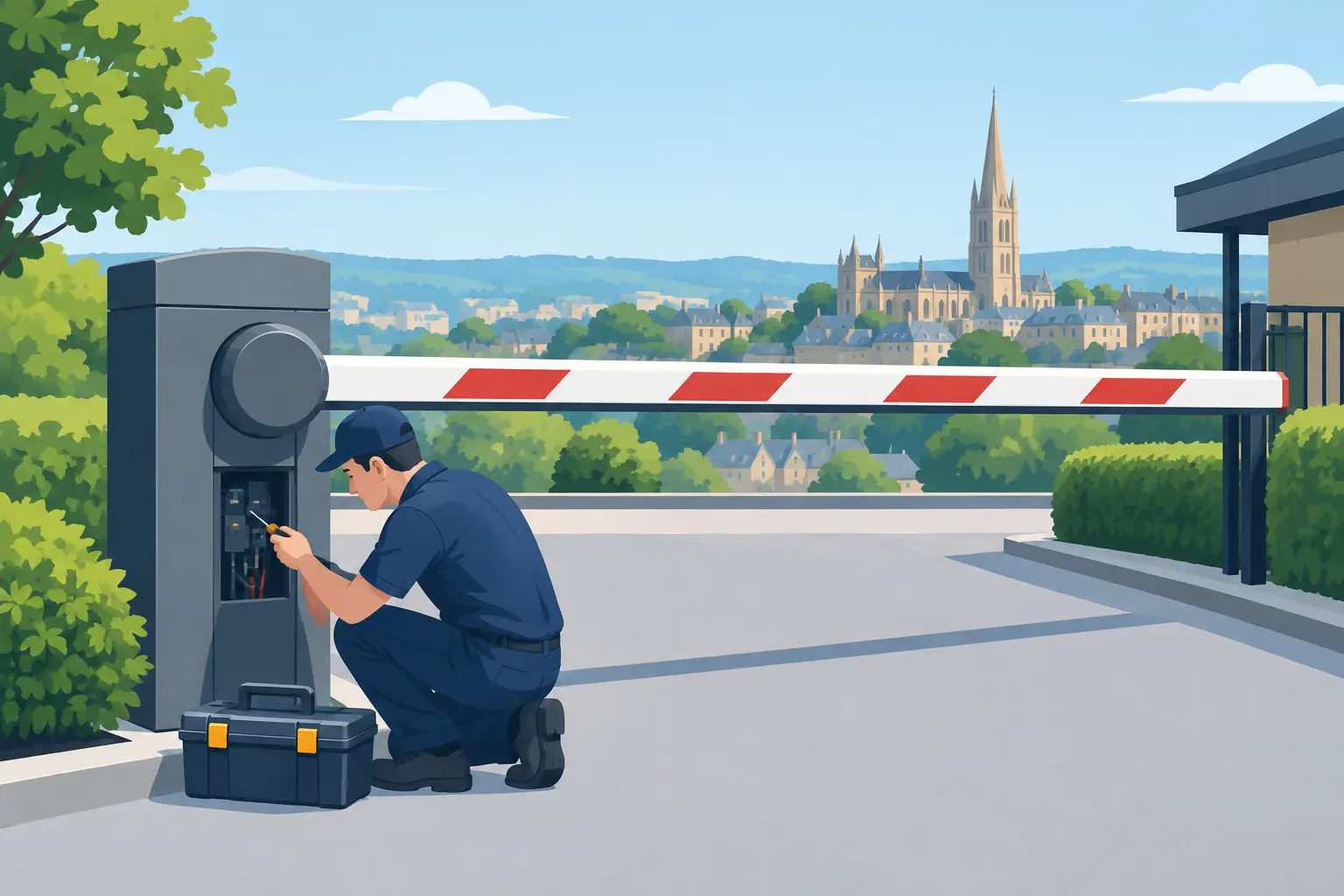
BlogA barrier that stays raised at a busy office, retail site, hospital, or private development is more than an inconvenience. It can leave parking areas uncontrolled, frustrate authorized drivers, and create a security gap at the entrance to your property. For FAAC car parking barriers repairs and maintenance in Cheltenham and Gloucestershire, the priority is restoring safe, dependable control without overlooking the reason the fault occurred.
FAAC barrier systems are widely used because they are designed for frequent operation and controlled vehicle access. Like any electromechanical system, however, they need the right setup, regular inspection, and prompt attention when performance changes. A slow boom arm, intermittent remote, damaged cabinet, or barrier that will not close may point to a minor adjustment – or to a developing fault that could cause a complete failure at the worst possible time.
When a FAAC parking barrier needs attention
Most barrier problems begin with small warning signs. The arm may hesitate before moving, stop partway through its cycle, or make a new grinding or clicking sound. Access credentials may work inconsistently, safety photocells may trigger without an obvious obstruction, or the barrier may only operate from one control point.
These issues should not be treated as normal wear. A parking barrier controls access to vehicles, staff, visitors, deliveries, and potentially restricted parts of a site. Continuing to operate equipment that is unreliable can create tailbacks, lead to manual workarounds, and put unnecessary strain on the motor, gearbox, springs, or control board.
A professional repair visit starts with the whole operating sequence, not simply the visible symptom. That includes the barrier cabinet, boom arm, power supply, control panel, safety devices, manual release, radio receiver, access-control connection, and ground loop or other vehicle-detection equipment where fitted. The right repair depends on how these components work together.
Common FAAC barrier faults and what they can mean
A barrier that will not open may have lost power, received no valid trigger signal, detected a safety condition, or developed a control-board or motor issue. If it opens but will not close, the cause is often related to photocells, loop detection, closing limits, or an obstruction within the operating area. It is not always safe to assume the barrier itself is at fault.
A boom arm that drops too quickly, rises unevenly, or will not remain in position may need its balancing system inspected. Springs and mechanical components are under load, so adjustment should be carried out by a trained technician. Attempting a quick fix without the correct knowledge can damage the equipment or create a safety risk.
Impact damage is another common callout. A vehicle may strike the arm because of poor visibility, tailgating, driver error, or a barrier that has not completed its cycle as expected. In some cases, replacing the arm or fitting a breakaway arrangement is sufficient. In others, the impact can affect mounting points, internal drive components, safety settings, or the cabinet itself. A proper inspection helps prevent a repair that looks complete but leaves the system unreliable.
Intermittent faults can be the most disruptive because they are difficult to predict. Moisture ingress, loose wiring, worn relays, aging batteries in wireless controls, unstable power, or damaged data connections can all cause a barrier to fail occasionally. For managed sites, this is where an experienced local engineer adds real value: fault finding should identify the underlying condition rather than repeatedly resetting the system.
The access system matters too
A FAAC barrier may be linked to fobs, keypads, intercoms, ANPR cameras, Paxton access control, timers, or an attended reception point. If credentials are not working or the barrier is opening at unexpected times, the fault may sit within the wider access-control setup.
This is especially relevant for commercial properties and multi-tenant developments. A repair should preserve the access rules that protect the site. For example, a barrier can be mechanically sound but still create a security concern if old fobs remain active, an intercom release is incorrectly programmed, or a vehicle loop is triggering too easily.
Why planned FAAC barrier maintenance is worth it
Reactive repairs are sometimes unavoidable, particularly after an impact or electrical failure. But regular maintenance is usually the most cost-effective way to reduce unexpected downtime. It gives a technician the opportunity to spot wear before it becomes a service interruption.
A maintenance visit typically checks the safe movement of the arm, mechanical condition, cabinet fixings, manual release, motor and gearbox operation, limit settings, safety photocells, control functions, warning devices, wiring, and external condition. The engineer can also test how the barrier responds to authorized commands and safety inputs, then make adjustments where appropriate.
The frequency of maintenance depends on the environment and use. A barrier at a quiet private parking area does not experience the same demand as one at a retail park, medical facility, distribution yard, or office complex with constant traffic. Sites exposed to standing water, road grit, heavy rain, or regular vehicle impacts may also need closer attention.
Maintenance is not simply about keeping the barrier moving. It helps maintain controlled access and a predictable experience for authorized users. That matters when staff need to arrive on time, visitors need clear entry instructions, or emergency access must remain available.
Safety should never be an afterthought
Barrier arms move through an area shared by cars, pedestrians, cyclists, and sometimes delivery vehicles. Safety devices must be correctly positioned, functional, and matched to how the entrance is used. A photocell blocked by dirt, misalignment, or damage can stop the barrier from closing. A failed safety device can be more serious.
Good maintenance includes checking that safety inputs respond as intended and that the barrier does not operate in a way that puts people or vehicles at risk. It may also identify whether the entrance layout itself contributes to problems. Poor signage, inadequate lighting, tight turning space, and unclear lane markings can all increase the likelihood of impact damage and tailgating.
Repair, upgrade, or replacement?
Not every FAAC barrier fault requires a new installation. If the cabinet, drive system, and controls are in good condition, a targeted repair and service may provide years of further reliable operation. Replacing worn parts early can be more sensible than waiting for an emergency breakdown.
There are situations where an upgrade is the better option. An older barrier may no longer suit the volume of traffic, boom length, speed requirement, or level of access control needed at the property. A site may also need better integration with intercoms, fob systems, CCTV, keypad entry, or managed access permissions.
Replacement becomes more likely where there is significant corrosion, repeated mechanical failure, extensive collision damage, obsolete controls, or a system that cannot meet current safety expectations. The answer depends on the equipment condition, available parts, traffic pattern, and the level of protection required. A professional assessment should explain the practical options clearly rather than recommending replacement by default.
Local support for Cheltenham and Gloucestershire sites
Parking access problems rarely occur at convenient times. A barrier failure can affect a homeowner’s private entrance, a landlord’s managed development, a business parking lot, or a busy commercial facility. Local support means the engineer understands the types of properties and operating conditions found across Cheltenham, Gloucester, Tewkesbury, and the wider Gloucestershire area.
JP Security brings 37 years of security and access-control experience to FAAC barrier repairs, servicing, upgrades, and integrated entrance systems. Where a barrier connects with CCTV, gates, intercoms, or access control, one specialist can assess the complete setup rather than treating each part as separate equipment.
Before arranging repair work, it helps to record what the barrier is doing, when the fault occurs, and whether there has been a recent power cut, impact, storm, or change to access permissions. If it is safe to do so, keep vehicles clear of the operating area and avoid forcing the arm. Those details can speed up diagnosis and help protect the system from further damage.
A dependable barrier is a quiet part of a well-run property: authorized vehicles enter, the site remains controlled, and daily operations continue without unnecessary disruption. If your FAAC barrier is showing signs of wear or has stopped working altogether, speak to an expert and arrange the practical repair or maintenance support your entrance needs.
