
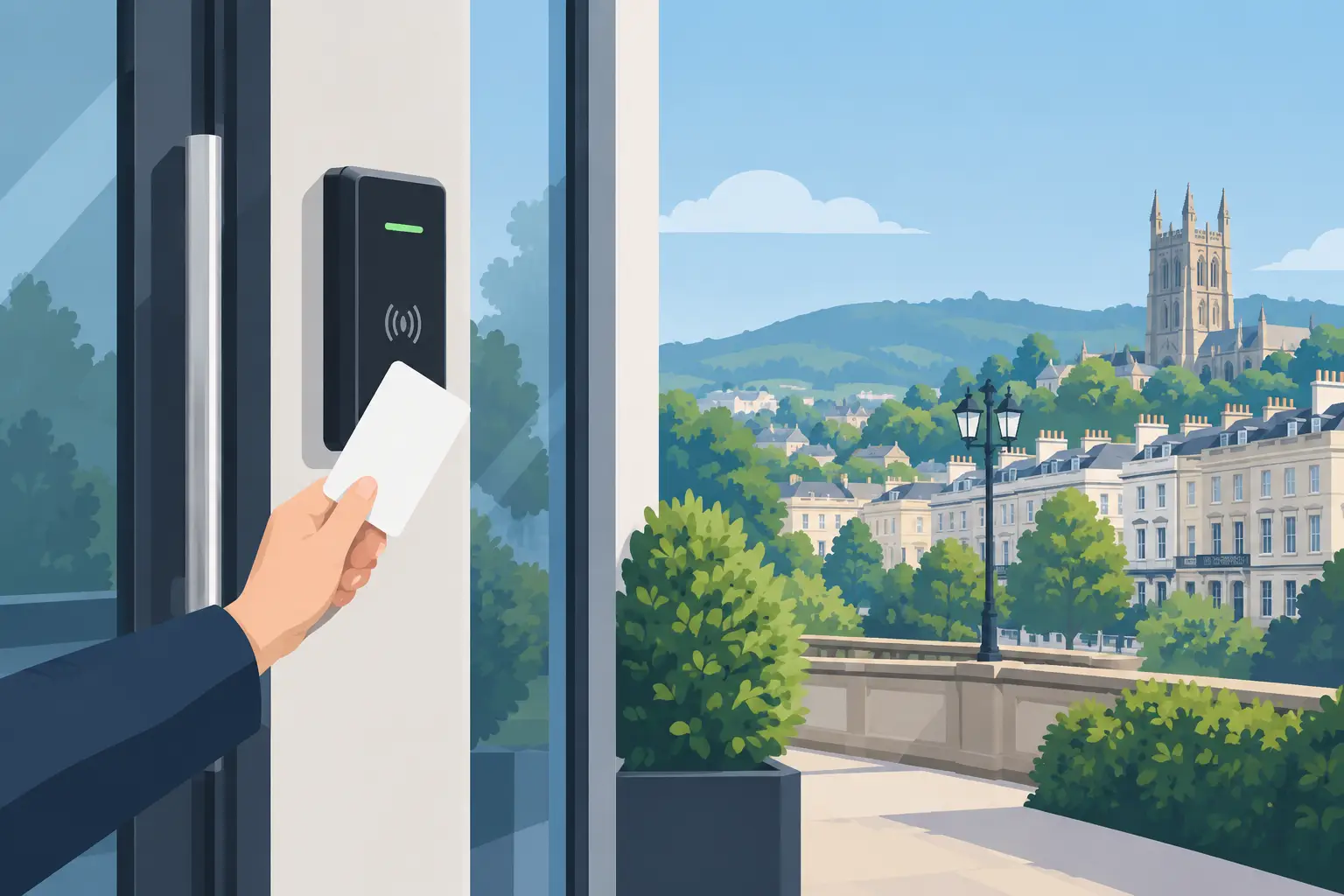
 Access Control
A front door, staff entrance, delivery gate, or apartment lobby should not depend on a key that can be copied, lost, or passed from person to person. Access control keypads and door entry options in Cheltenham and Gloucestershire give property owners a clearer way to decide who comes in, when they can enter, and how visitors are handled. The right choice is rarely about fitting the most features. It is about matching the system to how the property is actually used.
For a family home, that may mean seeing and speaking to a caller before releasing the gate. For an office, it may mean removing access from a former employee without collecting keys. On an industrial site, it may mean keeping vehicle and pedestrian access separate while maintaining a record of authorized entry. A properly designed system delivers security without making daily access difficult for the people who belong there.
What access control keypads do well
A keypad replaces or supports a traditional key by requiring a PIN code to release a door, gate, or barrier. It is a practical option for shared entrances, staff-only doors, workshops, storage areas, and small commercial premises. There are no physical credentials to issue, and codes can be changed when a tenant moves out, a contractor finishes work, or staff responsibilities change.
The main advantage is straightforward control. Rather than changing locks after a key is lost, an authorized person can update a code. Many systems can use different codes for different users or groups, making it easier to identify which access should remain active. Time-based permissions can also be useful. A cleaner, for example, may be permitted to enter only outside normal business hours.
However, a keypad is not always the best standalone answer. Codes can be shared, observed, or written down. In a busy setting, frequent code changes can also become inconvenient. For higher-risk doors or larger teams, a keypad is often stronger when paired with proximity fobs, cards, mobile credentials, or video verification.
Where keypads are a sensible fit
Keypads work particularly well at secondary entrances where authorized users need a quick, simple way in. They are common at side gates, private parking areas, staff rooms, communal refuse stores, and service yards. Weather-rated external keypads can be fitted at gates and perimeter doors, while internal units can control access between areas of a building.
The quality of installation matters as much as the keypad itself. The lock, electric strike, magnetic lock, exit button, cabling, power supply, and emergency release arrangements must all work as one system. A keypad that opens a poorly secured door does not provide meaningful protection.
Door entry options for Cheltenham and Gloucestershire properties
Door entry systems are designed around visitors rather than regular users. They allow someone at a gate or entrance door to call the resident, receptionist, or designated contact before access is granted. Audio systems provide voice communication, while video intercoms add a live image of the caller.
For homeowners, a video door entry unit can provide reassurance before opening a front gate or door. This is especially valuable where the entrance is set back from the house, where deliveries are frequent, or where a driveway gate is normally kept closed. Many modern systems can forward calls to a smartphone, allowing a homeowner to answer even when away from the property.
For apartment buildings, managed offices, healthcare settings, and retail premises, door entry can direct callers to a reception point or individual unit. A multi-tenant system needs careful planning so residents, staff, visitors, and delivery drivers can use it without confusion. It should also be straightforward for a property manager to add or remove users as occupancy changes.
Audio versus video entry
Audio entry is often the right fit when budget, simplicity, and reliable communication are the priorities. It allows the person inside to speak with a visitor and release the door remotely. For smaller offices, rear entrances, and controlled internal doors, that may be all that is required.
Video entry gives the person answering the call an additional layer of confidence. They can see whether a caller is a known visitor, a delivery driver, or someone they do not recognize. At a residential gate or unattended commercial entrance, that visual confirmation can make a significant difference.
Video is not automatically necessary everywhere. If an entrance is always staffed, or if visitors are already checked at a separate reception desk, an audio unit or a simple access-controlled door may be more appropriate. The aim is to place security where it provides a real benefit, not to add equipment for its own sake.
Combining keypad, fob, and intercom access
The most effective access arrangements frequently use more than one method. Staff may enter with a fob or card, visitors may use an intercom, and approved contractors may receive a temporary keypad code. This avoids the common problem of giving every user the same level of access.
A Paxton access control system, for example, can be configured around users, doors, and schedules. A facilities manager may have access throughout the site, while warehouse staff can enter only their assigned areas and office employees can use the main entrance during working hours. If a fob is lost, it can be removed from the system without replacing every lock.
For larger sites, access control can also support a wider security plan. Entry events can be reviewed alongside CCTV footage, vehicle barriers can be controlled separately from pedestrian gates, and restricted areas can be protected with additional authorization. This is useful for industrial facilities, medical environments, stock rooms, server rooms, and any location handling valuable equipment or sensitive information.
Questions to ask before choosing a system
The starting point should be the entry point itself. Is it a timber door, aluminum storefront, steel personnel door, automated gate, or communal entrance? Each requires compatible locking hardware and a suitable release method. External locations also need equipment that can withstand rain, temperature changes, and regular use.
Next, consider the people using it. A household may need simple access for family members and a way to screen visitors. A landlord may need to manage changing tenants. A business may need different permissions for employees, contractors, and managers. A school, clinic, or care setting may need controlled entry without creating unsafe delays during an emergency.
It is also worth deciding how much administration the property can support. A single code is easy to understand but offers limited accountability. Individually assigned fobs or cards provide better control, but they need to be issued and managed. Cloud-connected systems can make updates convenient across multiple locations, although they rely on sound network infrastructure and appropriate user permissions.
Finally, think beyond the first installation. Can the system expand if another door, gate, or tenant is added? Can it be repaired if an existing intercom fails? Choosing a recognized system and having it professionally installed makes future maintenance, upgrades, and fault finding far more manageable.
Installation details that protect reliability
Access control is only dependable when the electrical and physical security elements are considered together. A door closer must shut the door properly. The locking method must suit the door and its usage. Cabling should be protected and installed neatly, particularly around gates where movement and weather can cause damage over time.
Power backup deserves attention too. Depending on the property and system design, a power failure may need the door to release safely, remain secure, or follow a planned emergency procedure. This is not a detail to leave until after installation, particularly in workplaces, multi-occupancy buildings, and premises with public access.
Professional assessment also helps avoid common problems such as a gate intercom with poor audio, a camera positioned against direct sunlight, a magnetic lock on an unsuitable door, or a keypad placed where rain and glare make it difficult to use. JP Security designs access systems around the property, the users, and the level of protection required, with experienced technicians who understand how gates, alarms, CCTV, and entry systems work together.
A well-chosen keypad or door entry system should make access easier for authorized people and far less certain for everyone else. Speak to a local security expert before committing to equipment, and let the way your property operates guide the decision.
