
 Blog
BlogA gate remote that works only from a few feet away, opens the wrong entrance, or has disappeared with a former tenant is more than an everyday inconvenience. It can leave a home, business yard, apartment development, or staff parking area exposed. For dependable gate automation remotes in Cheltenham and Gloucestershire, the right answer is not always simply buying another handset. The remote, receiver, gate operator, safety devices, and access permissions must work together.
A professionally managed gate system gives authorized people convenient entry while keeping control with the property owner or site manager. Whether you need one replacement remote for a driveway gate or a complete access plan for a busy commercial entrance, the first step is identifying how the existing system is configured.
Why the Correct Gate Remote Matters
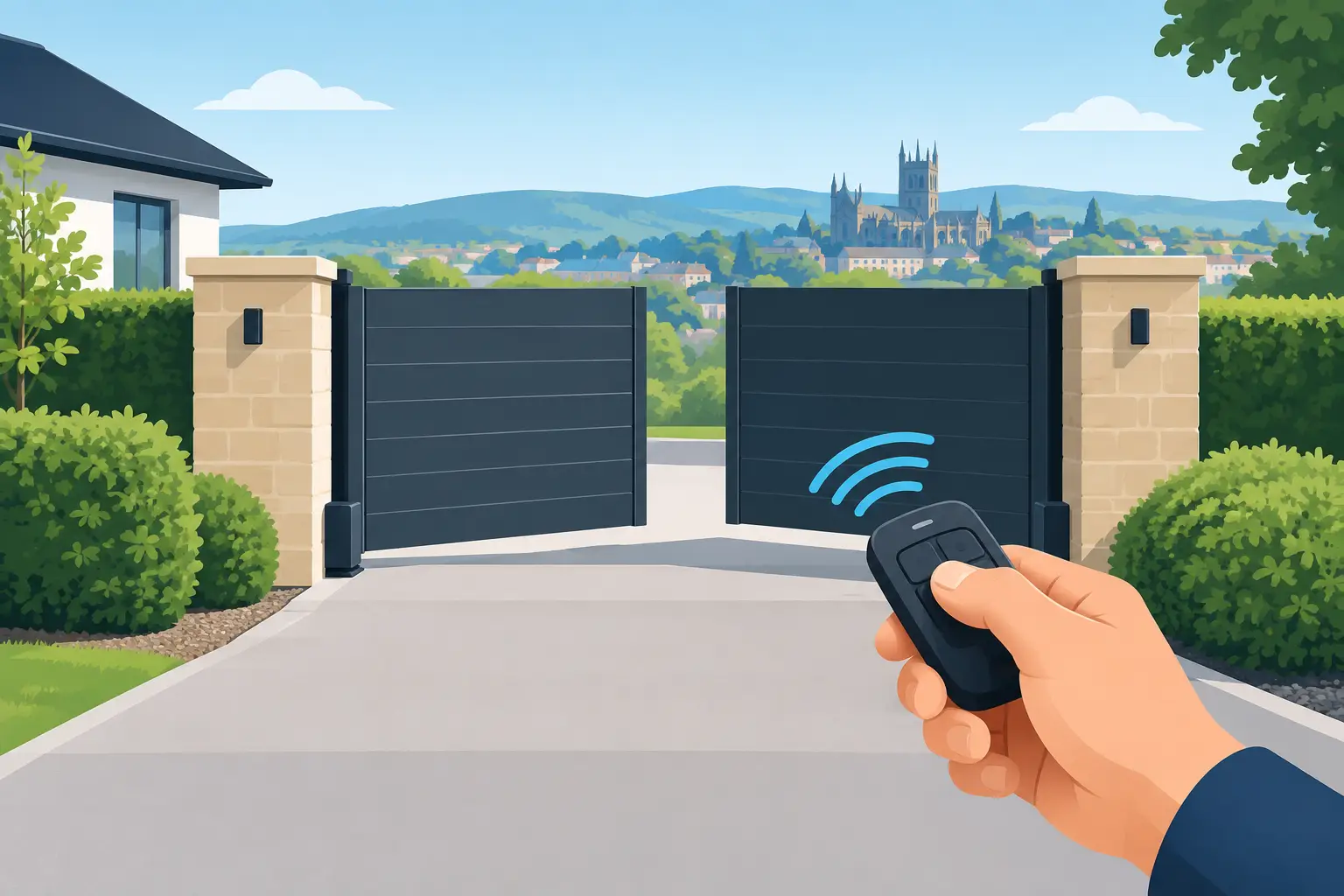
Most automated gates are operated by radio transmitters, commonly called remotes or fobs. When a button is pressed, the remote sends a coded signal to a receiver connected to the gate control panel. If the code is recognized, the operator opens, closes, or stops the gate.
That sounds simple, but not all remotes use the same frequency, coding method, number of channels, or security standard. A remote that looks similar to an existing BFT, CAME, DEA, or FAAC handset may not be compatible. Even a compatible model must be programmed correctly and assigned to the intended function.
For homeowners, a reliable remote means arriving home without stopping on the road, especially in poor weather or after dark. For businesses, it can mean controlled vehicle access for employees, deliveries, contractors, and fleet drivers. A remote is a small part of the system, but it has a direct effect on the security of the whole property.
Gate Automation Remotes in Cheltenham and Gloucestershire: Replacement or Repair?
A remote that has stopped working does not automatically need replacing. Batteries are a common cause, particularly where a remote has been stored in a cold vehicle or used infrequently. Physical damage, worn buttons, moisture, and a cracked casing can also affect performance.
However, the handset may not be the issue. If several remotes have reduced range or fail at the same time, the receiver, antenna, control board, power supply, or electrical connections may need attention. Gates can also appear unresponsive when a safety photocell is obstructed, an emergency stop is active, or the operator has detected a fault.
Before replacing a remote, a technician should establish whether the problem is isolated to one device or linked to the gate system itself. This avoids paying for a new transmitter that will not resolve the underlying fault. It also protects against the temptation to use an unsuitable universal remote, which may be unreliable or compromise the intended access controls.
When a Replacement Remote Is the Right Choice
Replacement is usually sensible when a handset is lost, stolen, badly damaged, or no longer holds a dependable signal. It may also be necessary when a new resident, employee, family member, or approved contractor needs access.
The important question is whether the old remote can be removed from the receiver memory. If a remote is missing and its code remains active, anyone who finds it may still be able to enter the site. On many systems, individual remotes can be deleted and new ones added. On older equipment, it may be necessary to clear the receiver memory and reprogram the remotes that should remain in use.
That process takes a little more time, but it restores control. It is particularly worthwhile after a property sale, tenancy change, staff departure, or dispute over access.
Choosing the Right Type of Gate Control
A basic single-button remote may be all a private driveway requires. Yet many properties benefit from a more considered arrangement. Two- or four-channel remotes can operate a main gate, pedestrian gate, garage door, or barrier from one device, provided the system has been designed and programmed for those functions.
Rolling-code remotes are often preferred because the transmitted code changes after each use, making it far more difficult to copy than older fixed-code systems. Compatibility still matters, and not every older gate operator can support a modern receiver without an upgrade.
For a shared or commercial site, remotes are only one option. A video intercom can allow staff or residents to confirm visitors before opening the gate. Keypads provide controlled entry without issuing additional handsets. Proximity fobs, Paxton access control, GSM calling systems, and timed permissions can offer stronger management where many people require access.
There is a trade-off. Remotes are quick and convenient for drivers, but they can be misplaced and are harder to audit on a large site. Access-control credentials may take more planning, but they make it easier to add or remove permissions as staff, tenants, and contractors change. The most suitable solution depends on the number of users, the level of security required, and how the entrance is used day to day.
Programming Remotes Without Losing Control
Some gate systems allow new remotes to be programmed from an existing handset. This can be convenient, but it is not always the best approach. On a residential system with a small number of trusted users, it may be appropriate. On a managed property or business site, remote enrollment should be controlled by an authorized person or security installer.
A clear record of who holds each remote is practical protection. Property managers should know how many devices are active, who they are assigned to, and how quickly they can be removed if lost. A simple register can prevent a common problem: years of old remotes remaining in circulation after occupants and employees have moved on.
Avoid leaving gate remotes in unattended vehicles, especially where the vehicle registration or site address could identify the property. If a remote is stolen, report it promptly so its authorization can be removed. The same applies when a vehicle is sold, returned from a lease, or transferred between staff members.
Do Not Overlook Gate Safety
Security and safety must work together. A gate remote should command a properly installed and maintained automated gate, not bypass safety measures. Photocells, safety edges, force settings, warning lights, manual release mechanisms, and the physical condition of the gate all need regular attention.
For example, a remote that appears to cause erratic closing may be exposing an existing safety fault. The gate could be reacting to a damaged photocell cable, misaligned sensor, or obstacle in its travel path. Adjusting settings without checking the system can create a more serious problem.
Commercial entrances need additional care because delivery vehicles, visitors, pedestrians, and staff may use the same area throughout the day. A site assessment should consider visibility, traffic flow, emergency access, and how a gate will behave during a power outage. A well-chosen remote is useful, but it cannot compensate for poorly maintained gate hardware or inadequate safety controls.
When an Upgrade Makes More Sense Than Another Remote
Older gate automation can often be repaired, especially where the mechanical gate structure and operator remain in good condition. A replacement receiver may allow newer remotes to work with an existing motor, giving better range and improved coding without replacing the whole installation.
An upgrade becomes more attractive when remotes are repeatedly failing, the receiver is obsolete, there is no reliable way to remove lost credentials, or the property needs more flexible access. Adding an intercom, keypad, camera coverage, or access-control system can give homeowners and site managers more confidence about who is entering.
For larger premises, integrating gate controls with CCTV and access records can help investigate incidents and manage busy entrances. It should be designed around the site rather than selected as a collection of separate products. The goal is practical control: the right people get in easily, while unauthorized access is harder to achieve.
Local Help for Existing and New Gate Systems
Gate equipment is often installed years before a new owner, tenant, or facilities manager takes responsibility for it. Manufacturer information may be missing, remotes may have been copied without records, and faults may be blamed on the wrong component. An experienced installer can identify the equipment, test the system, and explain the realistic options for repair, replacement, or upgrade.
JP Security supports residential and commercial customers across Cheltenham, Gloucester, Tewkesbury, and the wider Gloucestershire area with gate automation, repairs, and integrated security solutions. With 37 years of experience, the focus is on selecting equipment that suits the property and keeping access under your control.
If your gate remote is unreliable, missing, or no longer adequate for the way your property operates, treat it as an opportunity to review access before it becomes a security issue. A short professional assessment can provide the reassurance that every active remote has a purpose, every authorized user has the right access, and your gate is ready to perform when you need it.
