
 Blog
BlogA barrier that stays down at the start of a busy workday can quickly turn into a queue of frustrated staff, visitors, deliveries, and tenants. Professional BFT car parking barrier repairs and maintenance in Cheltenham and Gloucestershire help keep vehicle access controlled without disrupting the people who need to enter your site.
Whether the barrier protects a private residential development, office parking area, healthcare facility, retail site, or industrial yard, it has two jobs: permit authorized vehicles and discourage unauthorized access. When either function is unreliable, security and day-to-day operations both suffer.
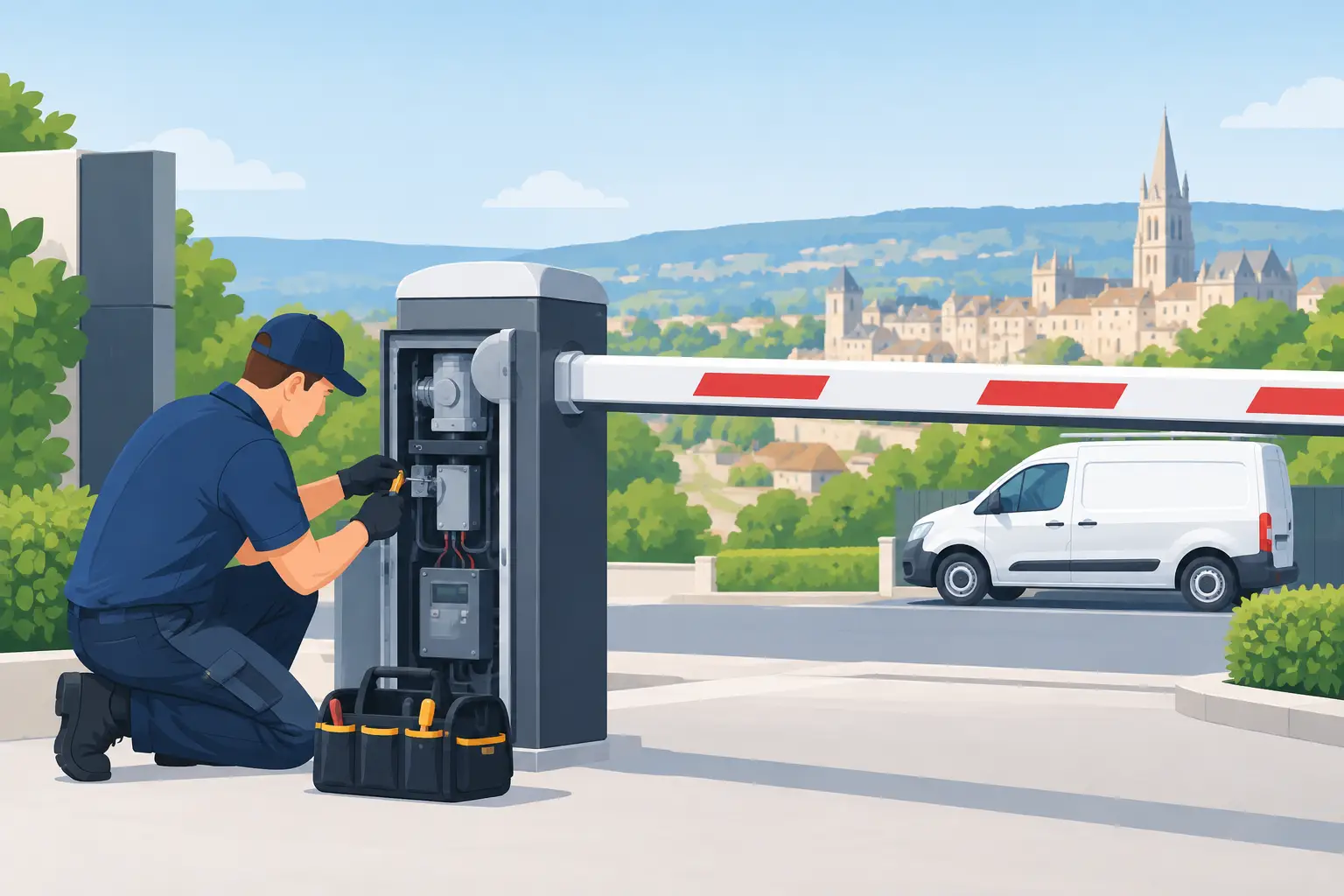
BFT car parking barrier repairs in Cheltenham and Gloucestershire
BFT barriers are widely used because they offer dependable automation, flexible access-control options, and models suited to different traffic levels. Like any powered entrance system, though, they need correct setup, routine checks, and prompt attention when something changes.
A fault is not always caused by the barrier operator itself. The issue may sit with a remote control, keypad, intercom, safety photocell, induction loop, access-control relay, power supply, cabling, or the barrier arm. A professional inspection identifies the real cause before parts are replaced unnecessarily.
For sites in Cheltenham, Gloucester, Tewkesbury, and across Gloucestershire, local support matters. A parking barrier may be the only vehicle entrance to a secure compound or staff lot. Delays can leave a site exposed, restrict access for legitimate users, or force a member of staff to manage traffic manually.
Common signs your BFT barrier needs attention
A barrier does not have to stop completely before it needs a service visit. Slow or uneven travel, a barrier arm that reverses unexpectedly, unusual motor noise, intermittent remote operation, or a flashing fault indicator all deserve investigation.
Other warning signs include a barrier that will not close behind a vehicle, opens without a valid command, or works only at certain times of day. Water ingress, damaged cabling, loose terminals, worn mechanical components, and electrical supply issues can all create intermittent faults that become harder to diagnose if left unresolved.
Safety devices should always be taken seriously. If photocells fail to detect a vehicle, the arm closes too quickly, or the unit repeatedly enters a safety stop, avoid bypassing the protection system to keep traffic moving. A temporary workaround can create a risk to people, vehicles, and the site operator.
What a professional repair visit should cover
Effective repair work begins with the whole entrance system, not just the visible barrier. A technician should check the operator, control board, arm and mounting, manual release, safety photocells, access devices, electrical connections, and the route used by vehicles.
The repair may be straightforward, such as replacing a failed photocell, resetting a control issue, repairing damaged wiring, or programming replacement transmitters. In other cases, the barrier may require adjustment, a replacement spring or mechanical component, a new control board, or a more substantial upgrade where the existing equipment is no longer economical to maintain.
The right decision depends on the barrier’s age, traffic volume, fault history, and the availability of suitable parts. Repair is often the sensible choice for a well-maintained BFT installation with a clear fault. Replacement can make better long-term sense when repeated callouts, obsolete components, or a change in site use are affecting reliability.
A professional should also test the system after work is completed. The barrier needs to open and close correctly, stop or reverse as designed, respond to authorized credentials, and release safely in the event of a power issue where applicable. Repairing the immediate fault without checking operation under normal conditions can leave hidden problems behind.
Maintenance prevents access problems at busy sites
Parking barriers are often overlooked because they operate dozens or hundreds of times without drawing attention. Yet every cycle places demand on moving parts, the motor, controls, and safety equipment. Preventive maintenance is the practical way to reduce unexpected breakdowns.
The appropriate service interval depends on usage and environment. A lightly used barrier at a small private development may need less frequent attention than a barrier controlling a busy commercial lot, hospital entrance, or industrial site with regular delivery traffic. Exposure also matters. Drainage, road grit, winter weather, vegetation, and accidental vehicle contact all affect performance.
During planned BFT barrier maintenance, the technician can inspect the arm for damage and alignment, check fixings, assess the cabinet condition, examine the manual release, test electrical connections, and confirm that safety devices work correctly. The control settings, opening and closing limits, force settings, and access-control response should also be reviewed.
Maintenance is also a good opportunity to consider the people using the entrance. If remotes are being shared too widely, lost credentials are not being removed, or visitors regularly need staff assistance to enter, the problem may be access management rather than the barrier itself. Keypads, intercoms, fobs, Paxton access control, and vehicle detection can be configured around how the site actually operates.
Protect the barrier from avoidable damage
No maintenance plan can prevent every incident, but a few practical measures reduce unnecessary callouts. Drivers should have a clear approach route and enough room to pass the arm safely. Faded markings, poor lighting, confusing signs, and tailgating can lead to vehicle strikes.
Make sure the barrier is not being forced up by hand or used while a known fault is present. Keep the cabinet area clear of debris and report changes promptly, especially after a collision, flooding, electrical work, or landscaping work near underground cables and detection loops.
Site managers should also keep control of who has access. Removing lost fobs, reviewing keypad codes, and ensuring departing employees or tenants no longer have credentials protects the parking area without requiring a new barrier installation.
When repair should become an upgrade
A reliable barrier operator can often remain in service for years with the correct maintenance. However, an upgrade deserves consideration when a site has outgrown its original setup. Examples include a residential development adding more homes, a business introducing stricter visitor control, or an industrial facility needing better separation between staff, deliveries, and public traffic.
An upgrade may involve a faster or heavier-duty barrier, improved safety devices, better vehicle detection, video intercom entry, number-plate-based access, or integration with CCTV and access control. The objective is not to add technology for its own sake. It is to give authorized users convenient entry while giving the property manager clear control over who enters and when.
For properties with gates, alarms, cameras, and door access systems already in place, it is useful to work with a specialist that understands the wider security picture. A parking barrier should support the site’s security plan, rather than operate as an isolated piece of equipment.
Local help for BFT barriers
JP Security provides repair, maintenance, and upgrade support for BFT car parking barriers and associated access systems across Cheltenham and the wider Gloucestershire area. With 37 years of experience in electronic security and automated access, the focus is on finding the fault, restoring safe operation, and recommending only the work that genuinely suits the site.
If your barrier is unreliable, damaged, or due for a planned inspection, speak to an expert before a minor issue becomes an access problem. A properly maintained barrier keeps traffic moving, protects parking spaces, and gives you greater confidence that your property remains controlled when it matters most.
