
 Blog
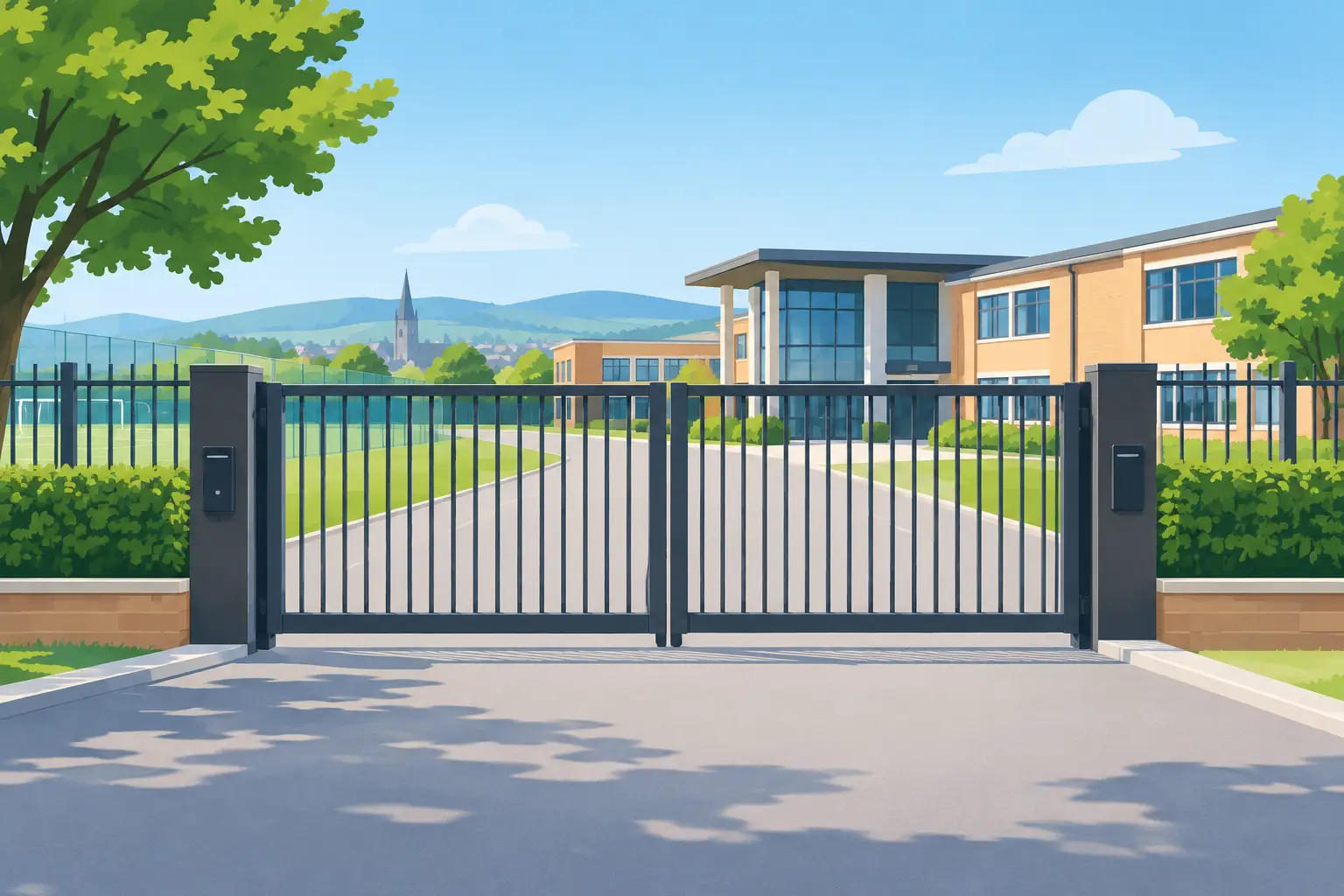
BlogThe busiest moment at a school gate is often the point at which security, safeguarding, and traffic management have to work together. Electric gates for schools in Cheltenham and Gloucestershire can help staff control who enters the site, protect students from vehicle movements, and create a calmer arrival and pickup routine without making the school feel unwelcoming.
For a primary school, academy, college, or specialist education setting, the right system is not simply a gate with a motor attached. It is a planned access solution that considers students on foot, parents in cars, delivery drivers, staff, visitors, emergency services, and the daily rhythm of the school.
Why schools need controlled vehicle access
An open entrance can make a school site difficult to manage. During drop-off and pickup, vehicles may enter without authorization, turn in unsuitable areas, or move close to pedestrian routes. Outside those peak times, open access can leave parking areas, outbuildings, and the main building more exposed to trespass, theft, or vandalism.
Electric gates give the school a clear boundary and a practical way to control it. Staff can authorize entry by remote control, keypad, fob, access card, video intercom, or a monitored reception point. The method should match how the site operates. A small school with a staffed office may benefit from a video intercom at the entrance, while a larger campus may need staff credentials, timed access schedules, and separate vehicle lanes.
Controlled access also supports safeguarding procedures. Visitors can be directed to a designated entrance rather than walking or driving freely onto the grounds. Contractors and deliveries can be admitted when expected, while unknown callers can be checked before access is granted. This helps reception staff make informed decisions rather than relying on an open driveway and a sign at the gate.
That said, electric gates are not a substitute for supervision, visitor procedures, or staff training. They work best as one part of a wider school security plan that may include CCTV, alarms, clear signage, well-marked pedestrian paths, and reliable communication between the entrance and reception.
Choosing electric gates for a school site
Every school has different pressures. A rural Gloucestershire school may have a long driveway and limited visibility from reception. A Cheltenham school near a busy road may be focused on preventing vehicles from queuing or children from stepping into traffic. Before selecting equipment, the site should be assessed at the times it is under most pressure, not just during a quiet afternoon.
Sliding, swing, and barrier options
Sliding gates are often a strong option where a wide entrance needs to be secured and there is room for the gate to travel along the fence line. They can be particularly useful on sloping approaches where a swing gate may be impractical. Their track, rollers, and travel area need to be designed for regular use and kept clear of leaves, gravel, and debris.
Swing gates can suit entrances with adequate clear space inside the property. They provide a traditional appearance and can work well at smaller school driveways, but their opening arc must never interfere with public roads, pedestrian routes, parked vehicles, or gathering areas.
For some sites, an automatic barrier is the better answer. Barriers allow faster vehicle flow at staff parking areas or controlled entrances, especially when paired with card, fob, or license-plate-based authorization. They do not offer the same physical boundary as a solid gate, so they are usually best used where traffic control is the main concern rather than perimeter security.
A professional survey will establish which approach fits the available space, traffic volume, ground conditions, and level of security required. The best-looking option is not always the safest or most reliable choice for a busy school day.
Pedestrian safety must lead the design
Schools have a higher duty of care because children may not recognize the hazards of an automated gate. A properly designed installation needs safety devices that detect people, vehicles, and obstructions in the gate’s path. These can include photocells, safety edges, force limitation, warning lights, and clearly defined exclusion zones.
Separate pedestrian access is usually essential. Students, parents, and visitors should not have to pass through the same opening used by moving vehicles. A dedicated pedestrian gate with controlled entry reduces congestion and makes vehicle movements easier to supervise. Where a gate sits close to a public sidewalk or road, careful layout is especially important so that people are not forced into an unsafe waiting position.
The gate’s speed, closing behavior, and hold-open periods should reflect the school’s real use. A gate that closes too quickly can create risk and frustration. One that remains open too long may undermine the reason for installing it. Timed settings can be adjusted around drop-off, pickup, deliveries, and evening events, but those settings should be reviewed as school routines change.
Access control should be simple for staff
A complicated system is unlikely to be used consistently. The right solution gives authorized staff a simple way to operate the entrance while keeping a record or visual check where needed. Video intercoms are useful when reception needs to see and speak with visitors before allowing them in. Audio intercoms may be adequate for a smaller, lower-risk entrance with good sightlines.
For staff parking, proximity fobs, cards, or Paxton access control can reduce the need to issue and retrieve physical keys. Permissions can be changed when staffing changes, and lost credentials can be removed without replacing every lock. Time-based permissions may also help a school manage cleaners, clubs, contractors, and community users outside normal hours.
Remote opening through a secure app can be convenient for facilities staff, but it should be configured carefully. Schools should decide who has authority to operate the gate remotely, how access is removed when roles change, and what happens if a phone is lost. Convenience should never weaken accountability.
Planning for emergencies and everyday reliability
An electric gate must not create an obstacle in an emergency. The installation should be planned with the school’s fire procedures and emergency access requirements in mind. Authorized emergency responders need a reliable method of entry, and staff need clear instructions for operating the system if there is a power issue or fault.
Manual release arrangements are an important part of this planning. The release mechanism should be secure from unauthorized use but accessible to trained personnel. School leaders should know where it is, who holds the key or release tool, and how to use it safely. This is not a detail to leave untested until an urgent situation occurs.
Power supply, cabling, drainage, and ground preparation also affect long-term performance. Gates installed on a poorly prepared entrance can suffer from movement, water damage, unreliable safety devices, or repeated alignment problems. Local weather, exposed locations, and heavy daily vehicle use all place demands on motors and moving parts.
Maintenance is therefore a security requirement, not an optional extra. Regular inspections can identify worn hinges, damaged safety edges, loose fittings, contaminated photocells, or changes to the gate’s travel before they cause downtime. A school should also have a clear repair contact for faults, particularly if the entrance is needed for daily operations or emergency access.
Integrating gates with wider school security
A gate delivers more value when it works with the rest of the site. CCTV can provide visual coverage of the entrance, help staff review incidents, and discourage inappropriate behavior around the perimeter. An intercom gives reception immediate communication with visitors. Access control can manage staff and contractor credentials, while alarms protect buildings once the site is closed.
Integration should be proportionate. A small school may only need a well-designed automated gate, pedestrian access, and video intercom. A larger site with multiple entrances, parking areas, and outbuildings may need several access points tied into a central system. The goal is not to add technology for its own sake. It is to give the school clear control over its site without creating unnecessary work for staff.
With 37 years of security installation experience, JP Security can assess the way a school entrance is used, specify suitable automation and safety measures, and support the wider access control, CCTV, and intercom requirements around it. A site survey helps identify the practical details that are easy to miss from plans alone.
A school gate should make the first and last part of the day safer, not more difficult. Speak to an experienced local installer about the traffic, safeguarding, and access challenges at your site, then build a system that staff can operate with confidence every day.
