
 Blog
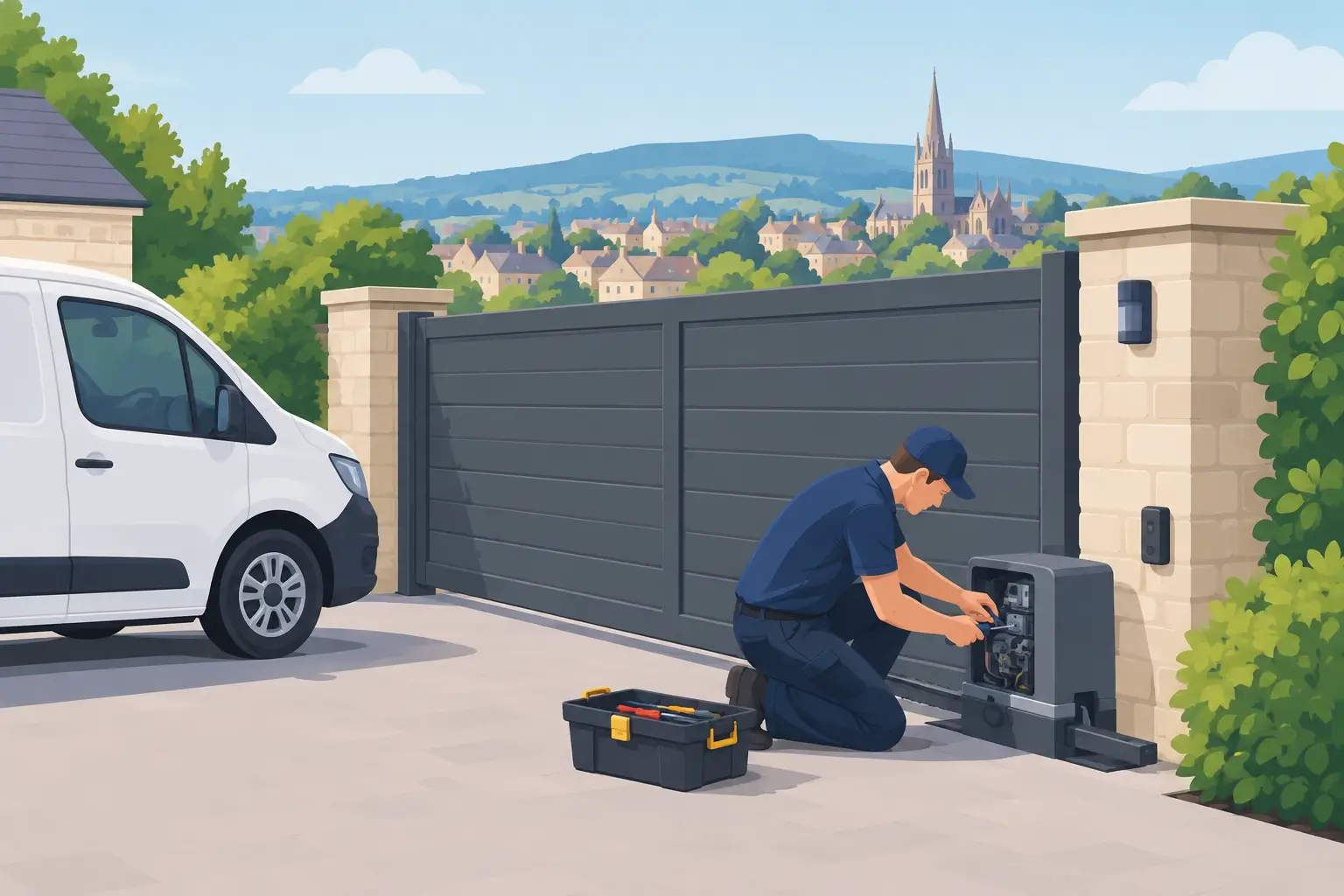
BlogA gate that stops halfway across a driveway, opens without warning, or will not respond at all is more than an inconvenience. It can leave a family home exposed, delay staff and deliveries, or prevent vehicles from leaving a site safely. Local gate automation repairs in Cheltenham and Gloucestershire should deal with the immediate fault while also identifying why it happened, so the problem does not return at the next cold spell or busy working day.
Electric gates are made up of moving mechanical parts, safety devices, control equipment, cabling, and access controls. A fault in any one area can stop the whole system. The right repair starts with a proper diagnosis, not a quick adjustment that masks an underlying issue.
When an automated gate needs professional attention
Most gates give a few warnings before they fail completely. A sliding gate may become slower than usual or sound strained as it travels. Swing gates may hesitate, stop short of their closed position, or need a second command from the remote. You may also notice the control panel tripping, an intercom call button working intermittently, or a gate that reverses when there is no obstruction.
These signs are worth acting on early. Continuing to use a gate that is dragging, reversing unexpectedly, or failing to detect obstacles can cause additional damage to the operator and create a safety concern for people, pets, vehicles, and visitors.
For commercial premises, the effects can spread quickly. A gate failure at an industrial yard, managed car park, healthcare property, or retail delivery entrance can affect access, operations, and site security. Temporary manual operation may be possible in some cases, but it should never become the long-term answer to a recurring fault.
Common gate automation faults and what causes them
A gate system is only as reliable as its components and installation conditions. The symptoms can appear similar, but the cause may be mechanical, electrical, or related to how the gate is being used.
Worn or obstructed gate hardware
Automation equipment cannot compensate for a gate that is physically difficult to move. Sliding gates rely on correctly aligned tracks, rollers, rack teeth, and guide assemblies. Leaves, gravel, ice, and accumulated dirt can restrict movement. On swing gates, worn hinges, ground movement, or sagging gate leaves can put excessive load on the motors.
A technician should check that the gate moves freely and is correctly aligned before adjusting the automation. Replacing a control board without addressing a binding gate often leads to another failure.
Motor, gearbox, or control panel problems
Gate motors work hard, particularly on heavy timber, steel, or composite gates. Over time, internal gears can wear, capacitors can weaken, and motors can overheat or lose power. A gate may hum but fail to move, travel only part way, or operate reliably in one direction but not the other.
The control panel is the system’s decision-maker. It receives commands from remotes, keypads, intercoms, and access control equipment, then checks safety inputs before operating the gate. Water ingress, damaged wiring, power surges, insects, and aging electrical components can all affect its performance. A professional assessment can determine whether a repair is appropriate or whether replacing an older controller will provide better long-term reliability.
Safety photocells and detection devices
Photocells create an invisible beam across the entrance. If the beam is interrupted, or if the sensors are out of alignment, the gate should stop or reverse. This is a vital safety function, but it can also be the source of a frustrating fault when a sensor is dirty, damaged, poorly aligned, or affected by moisture.
Safety edges, induction loops, and vehicle detection equipment need the same attention. It is not advisable to bypass these devices simply to get a gate moving. A gate that operates without its required safety protections can put people and property at risk.
Remote controls, intercoms, and access issues
Sometimes the operator is working perfectly, but the command device is not. Flat remote batteries, lost programming, faulty receivers, damaged keypad buttons, or network issues with video intercoms can all prevent authorized entry.
For properties with multiple users, it may be time to review how access is managed. A homeowner may benefit from an intercom that allows visitor verification from a mobile device. A business or managed site may need controlled credentials, timed access permissions, or integration with Paxton access control. Repair work can be an opportunity to make entry easier to manage without compromising security.
Why local gate automation repairs matter
Cheltenham, Gloucester, Tewkesbury, and the wider Gloucestershire area include everything from private rural driveways to busy commercial yards and multi-occupancy properties. A local technician can assess the gate in its actual setting, including drainage, exposure to weather, site traffic, and the condition of existing cabling.
Weather is often a contributing factor. Persistent rain can expose poor cable joints or damaged enclosures, while freezing conditions can affect tracks, hinges, and moving parts. A gate near a tree-lined driveway may need more regular clearing and maintenance than one in an open setting. The most suitable repair depends on the gate type, the operator, and the way the entrance is used each day.
Local support also matters when a fault affects security. If a gate is stuck open overnight, will not close after staff leave, or prevents safe access to a property, a knowledgeable repair specialist can provide practical advice on securing the entrance while the fault is addressed.
What a proper gate repair visit should include
A professional repair is not just about restoring movement. It should begin with an inspection of the gate structure, motors, control panel, electrical supply, safety equipment, and access devices. The technician can then identify whether the fault is isolated or part of a wider issue.
At JP Security, repairs can be carried out on established gate and access systems, including equipment from recognized manufacturers such as BFT, CAME, DEA, and FAAC. Manufacturer familiarity is useful because fault codes, programming methods, spare parts, and safety settings vary between systems.
Once the cause is clear, the recommended work should be explained in plain language. In some cases, a sensor realignment, wiring repair, replacement remote, or motor service is enough. In others, an aging control panel or unsupported operator may make an upgrade the more sensible investment. The decision should take account of the gate’s age, parts availability, safety condition, and expected usage, rather than focusing only on the lowest immediate cost.
Repair, upgrade, or replacement?
Repair is often the right choice when the gate structure is sound, the motor has a serviceable fault, and replacement parts remain available. It is usually more cost-effective to repair a relatively modern system with a known issue than to replace it unnecessarily.
An upgrade may be better where a gate still operates but lacks reliable safety features, has poor remote range, or cannot support the access controls the property now needs. For example, replacing an older audio entry point with a video intercom can improve visitor verification, while an updated controller can provide more dependable operation and easier programming.
Complete replacement becomes more likely when the gate itself is badly misaligned, corrosion has affected critical components, or the automation equipment is obsolete and repeatedly failing. A qualified installer should explain the trade-offs clearly and design the replacement around the entrance, traffic level, and security requirements.
Simple steps that help prevent repeat faults
Owners and site managers do not need to service an automated gate themselves, but a few routine checks can help spot trouble early. Keep sliding tracks and photocell lenses clear of dirt, leaves, and debris. Watch for changes in movement, unusual noises, loose hinges, damaged cables, or a gate that needs repeated commands.
Do not force the gate by hand unless it has been safely released using the correct manual procedure. Forcing an engaged operator can damage the gearbox or drive mechanism. It is also wise to make sure responsible users know where the manual release is located and what to do during a power outage.
For busy entrances, planned maintenance is a practical safeguard. Regular testing of safety devices, mechanical checks, and electrical inspections can reduce unexpected downtime and help protect the life of the system.
A reliable automated gate should give you controlled access without becoming another daily concern. If your entrance is slow, noisy, unreliable, or unsafe, speak to a local gate automation specialist before a minor fault becomes a locked-out property or an unsecured site.
