
 Blog
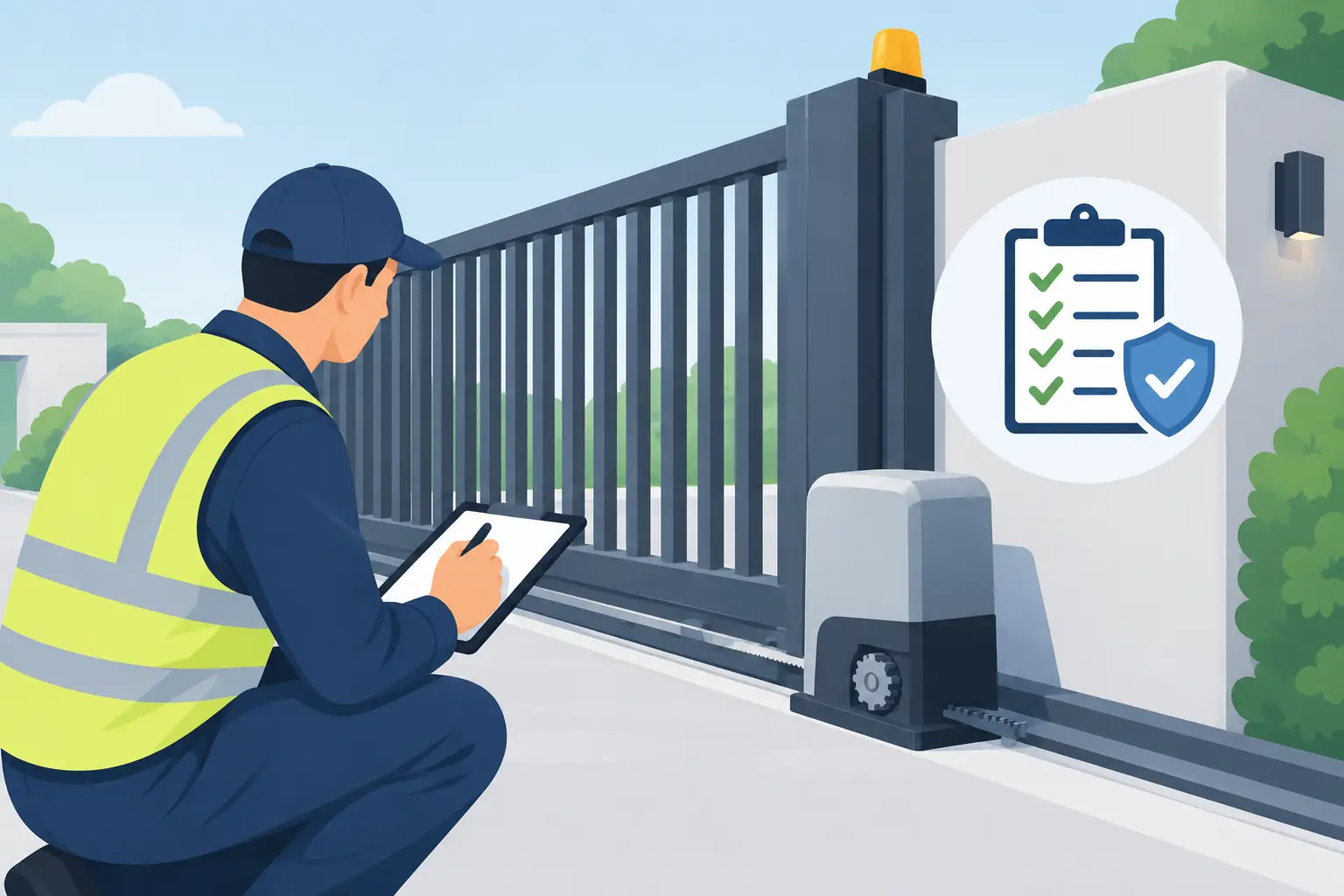
BlogA gate that opens perfectly can still be unsafe. A closing force set too high, a photocell that no longer detects a child, or a worn hinge that changes the gate’s movement can create a serious hazard without causing an immediate breakdown. That is why an automated gate safety inspection should focus on how the entire system behaves around people, vehicles, and the property it protects – not simply whether the motor runs.
For homeowners, this means protecting family members, visitors, pets, and delivery drivers. For businesses, managed properties, healthcare sites, and industrial premises, it also means reducing disruption, protecting staff, and maintaining safe access for authorized vehicles. A professional inspection identifies developing faults before they become an incident, an expensive repair, or an unreliable entrance.
Why automated gate safety inspection matters
An automatic gate is a powerful moving machine. It may be used several times a day at a private home or hundreds of times at a busy commercial entrance. With regular use, components naturally move out of adjustment: brackets loosen, hinges wear, safety edges deteriorate, and underground cabling can be affected by moisture or ground movement.
The risk is not limited to the gate leaf itself. Entrapment points can exist between a sliding gate and a fence, at hinge areas on a swing gate, beneath a rising barrier arm, or where a gate meets a fixed post. A gate might also behave differently in high winds, heavy rain, freezing temperatures, or when its track is obstructed by leaves and debris.
An inspection gives property owners a clear picture of these risks. It also helps distinguish between a minor maintenance requirement and an issue that needs immediate attention. Waiting until a gate has stopped operating is rarely the safest or most cost-effective approach.
What an automated gate safety inspection should cover
A proper inspection begins with the gate structure, because automation cannot make an unstable or poorly moving gate safe. Before testing the controls, a technician should assess the gate’s physical condition, travel, and mounting points.
Gate structure and mechanical movement
The gate should move freely and predictably. On a sliding gate, this includes checking the track, guide rollers, wheels, end stops, rack, and the area around the opening. On a swing gate, it includes hinges, posts, arms, brackets, and the condition of the gate leaf. Excessive play, corrosion, cracking, sagging, or damaged welds can affect how the automation responds.
The motor and gearbox also need inspection. Unusual noises, fluid leaks, vibration, slow movement, or inconsistent stopping points may indicate wear that needs repair before it affects safety performance. Mechanical resistance can cause an operator to work harder than intended, increasing force at the wrong point in the gate cycle.
Safety devices and obstruction detection
Photocells, safety edges, light curtains, and other detection devices are fitted to stop or reverse the gate when a person, vehicle, or obstacle enters a danger area. These devices should be physically checked, cleaned where necessary, aligned correctly, and tested during gate operation.
A photocell can appear intact while failing intermittently due to condensation, sunlight, damaged wiring, poor alignment, or impact from a vehicle. A safety edge may have a split casing or internal fault that is not obvious from a distance. Testing each device in real operating conditions is essential.
The technician should also assess the force settings and obstacle detection of the operator. Gates must not continue applying excessive force when they meet an obstruction. The correct setting depends on the gate’s size, weight, design, operating environment, and safety equipment. Simply reducing the force without understanding the gate’s mechanical condition can create reliability problems, so adjustments must be made carefully.
Controls, access points, and emergency release
An inspection should cover every method used to operate the gate, including remote controls, keypads, vehicle detectors, intercoms, push buttons, access-control readers, and timed opening functions. A command should open, stop, and close the gate as intended, without unexpected movement or delay.
Emergency release is particularly important. In the event of a power failure, fault, or emergency, authorized people need to know how to release the gate safely. The release mechanism must be accessible, functional, and protected from unauthorized use. On commercial sites, staff should understand the procedure rather than discovering it during an urgent situation.
Where a gate is connected to an intercom, CCTV, alarm, or access-control system, the inspection should consider those connections as well. For example, a video intercom can help residents verify visitors before opening a gate, while Paxton access control can restrict entry to authorized users. These systems improve control, but the gate’s safety functions must always operate independently and correctly.
Electrical condition and warning measures
Electrical enclosures, cabling, earthing, isolators, batteries, and control boards need a visual and functional review. Water ingress, damaged conduit, exposed cable, insect activity, or poorly sealed connections can lead to intermittent faults and unreliable safety devices.
Warning signs, hazard markings, and any required protective guards should be present, visible, and appropriate for the site. At a private driveway, the arrangement may be straightforward. At a shared development, retail car park, warehouse, or healthcare facility, clearer instructions and separation between pedestrians and vehicles may be needed.
Different sites need different safety measures
There is no single inspection plan that suits every automated gate. The risks depend on the location, gate type, users, traffic volume, and surrounding layout.
A residential swing gate may need particular attention around hinge-side gaps, pedestrian access, and children using the driveway. A commercial sliding gate may need more extensive protection because delivery vehicles, employees, visitors, and contractors all approach it throughout the day. At an industrial site, large gate leaves, HGV traffic, and a lack of separate pedestrian routes can increase the consequences of a fault.
Shared properties create another challenge. Residents may assume someone else is responsible for reporting a damaged photocell or gate that closes too quickly. Property managers should have a clear process for reporting faults, arranging inspections, and keeping records of work completed.
Signs you should arrange an inspection now
A scheduled service is sensible, but some warning signs call for faster action. Do not continue using the gate normally if it reverses unpredictably, fails to stop when a safety device is triggered, closes with excessive force, makes grinding noises, or has visible damage to hinges, tracks, posts, wiring, or safety equipment.
Other signs can be less dramatic: the gate slows down, stops short of its usual position, only works from some controls, or needs repeated remote-button presses. These faults may be caused by settings, worn components, power supply issues, or communication problems. They should still be investigated before a minor fault becomes a safety concern.
If there is any doubt about the gate’s safe operation, isolate it where practical and arrange a professional assessment. Do not bypass photocells, hold a safety edge down, increase force settings, or make temporary wiring changes to keep the entrance moving. Those shortcuts can expose users to unnecessary risk and often make the final repair more complex.
How often should a gate be inspected?
The right frequency depends on use and environment. A lightly used residential gate may require less frequent professional attention than a commercial gate operating throughout the day. Sites exposed to coastal air, heavy traffic, frequent deliveries, standing water, or vandalism may also need closer monitoring.
Between professional visits, a responsible person should make simple visual checks. Keep tracks and photocell areas clear, listen for unusual sounds, watch how the gate stops and reverses, and report damage promptly. These observations do not replace a professional safety inspection, but they can prevent a developing problem from being ignored.
For property owners across Cheltenham, Gloucester, Tewkesbury, and Gloucestershire, JP Security can assess automated gates as part of a practical security and access-control plan. Experienced technicians can identify faults, repair established equipment, and advise on safety upgrades suited to the gate and the way your site is used.
A secure entrance should never require people to take chances. Arrange an inspection when your gate’s behavior changes, after an impact or repair, and at sensible intervals based on how often it operates – so safe access remains part of the protection your property depends on.
