
 Blog
BlogA lost key can create more than a minor inconvenience. For a business, it may mean uncertainty over who can still enter the building. For a landlord, it can mean changing locks between tenants. For a homeowner, it can leave a side gate, garage, or shared entrance less secure than it should be. Paxton access control replaces that uncertainty with clear, manageable control over entry.
Rather than relying on metal keys that can be copied, misplaced, and difficult to track, a professionally designed system lets you decide who may enter, where they may go, and at what times. It is a practical security improvement for offices, retail premises, industrial facilities, healthcare settings, apartment buildings, and homes with gates or outbuildings.
What Paxton Access Control Does
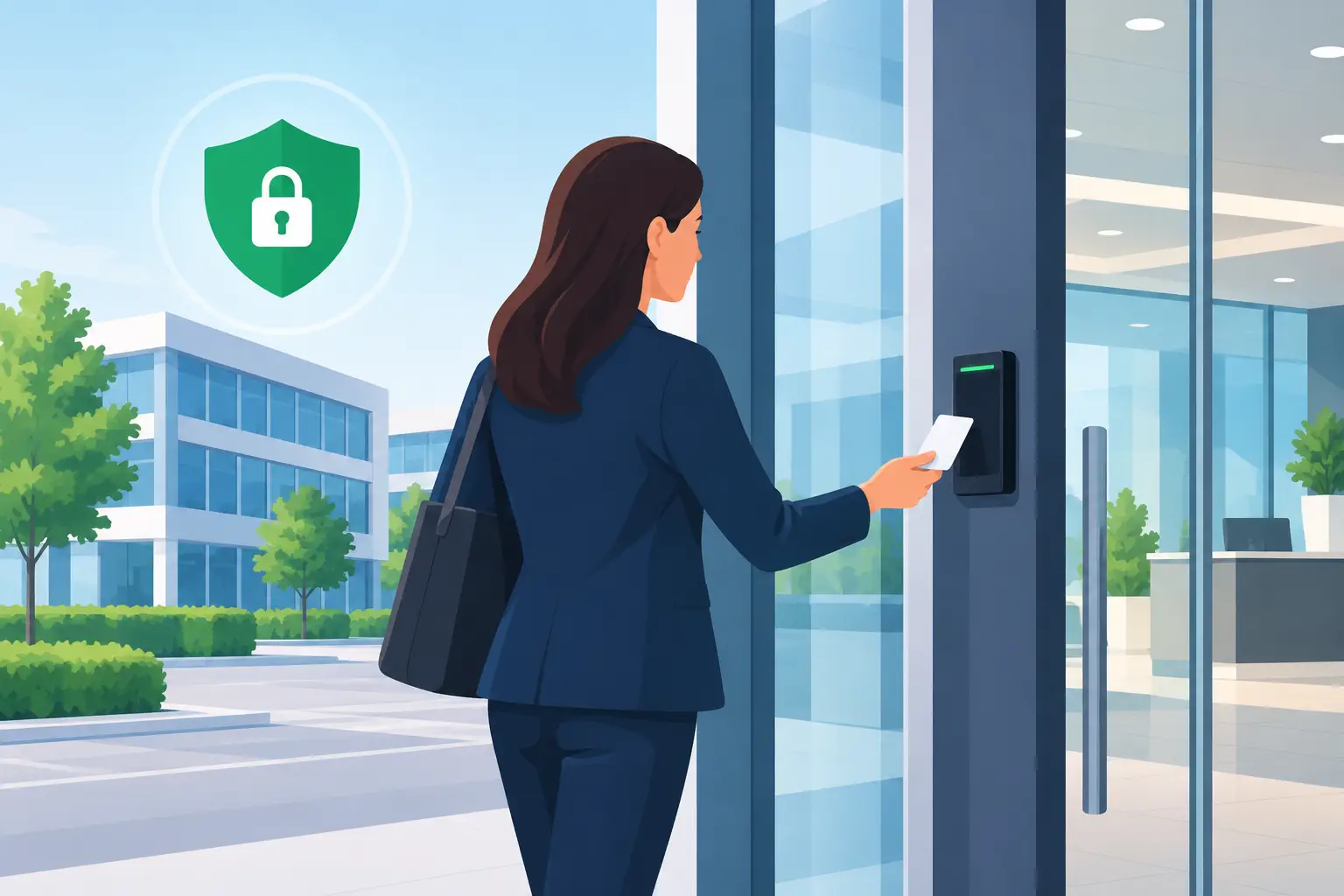
Paxton access control is an electronic system for managing doors, gates, barriers, and restricted areas. Users present a card, fob, PIN, mobile credential, or other approved method at a reader. If their permission is valid, the system releases the lock or opens the entrance.
The real value is in the control behind that simple action. An administrator can add a new employee without issuing a physical key, remove access immediately when someone leaves, and apply different permissions to different people. A delivery driver may be allowed through a vehicle gate during set hours, while a manager can access the building and secure storage areas at any time.
Depending on the system selected, entry events can also be reviewed. This creates a useful record when a property manager needs to investigate an incident, confirm when a contractor arrived, or understand how a restricted area was accessed. It is not about making everyday work difficult. It is about ensuring access follows the needs of the property.
Where Controlled Entry Makes the Biggest Difference
Every site has different pressure points. A small office may need to protect staff, computers, and confidential files without making entry inconvenient. A warehouse may need separate permissions for the main entrance, loading bays, stock rooms, and vehicle gates. A medical or care setting may require more closely managed access around staff-only rooms, records, or equipment.
For residential properties, controlled entry is often most valuable at the perimeter. An access-controlled gate, pedestrian entrance, or video intercom can help residents verify visitors before allowing them onto the property. Shared buildings can also benefit from a system that provides residents with convenient credentials while allowing management to cancel lost fobs without replacing every lock.
Retail and hospitality sites face another common issue: staff changes. Keys often remain in circulation long after a role has ended. With electronic permissions, access can be altered from the administration software rather than waiting for keys to be returned or arranging a lock change.
Choosing the Right Paxton System
Paxton offers more than one approach to access control, and the best fit depends on the size of the site, the number of entrances, the level of reporting required, and how the system may grow. The first decision is rarely just about the reader on the wall. It is about how the property operates each day.
Standalone control for straightforward doors
A standalone solution can suit a single door or a small number of entrances where basic authorization is the priority. It is often a sensible choice for a staff room, private office, storage unit, or residential gate. These systems can be cost-effective and simple to use, but they may offer less centralized reporting and management than a networked installation.
Networked control for growing sites
For multi-door commercial buildings, managed properties, and sites with changing staff access, a networked system usually provides greater flexibility. Permissions can be managed from a central point, access events can be reviewed, and additional doors can be incorporated as requirements change.
This approach is particularly useful when access rules are more detailed. You may want cleaners to enter only outside working hours, contractors to have temporary access, or senior staff to enter secure areas that remain unavailable to general personnel. A properly planned networked system makes those decisions manageable without creating a separate key ring for every door.
Entry systems that work with visitors
Access control can also work alongside video and audio intercoms. Visitors call from an entrance panel, the resident or staff member verifies who is there, and entry can be released when appropriate. This is useful at apartment buildings, offices, gated homes, schools, and delivery entrances.
The right combination depends on whether the entrance is mainly used by known credential holders, occasional visitors, or both. A staff-only rear door may only need a reader and secure locking. A main entrance with frequent visitors may benefit from an intercom and camera as well.
Security Is About the Whole Door, Not Just the Reader
An access system is only as reliable as the door, lock, power supply, cabling, and installation behind it. This is why a survey matters before equipment is selected. A heavy fire door, aluminum storefront door, external gate, or internal office door each needs a different approach to locking and safe release.
A professional installer will consider how the door behaves during a power failure, how people leave the building in an emergency, whether the lock is suitable for the location, and whether cabling needs protection. Fire safety and safe egress must never be treated as an afterthought. People need to leave quickly when required, while the property remains protected during normal operation.
This is also where low-cost, piecemeal installations can create problems. A reader may look tidy on day one but deliver poor results if the lock is incorrectly specified, the gate automation is not properly integrated, or the network connection is unreliable. Good access control is planned as part of the building, not fitted as an isolated gadget.
Practical Permissions That Reduce Risk
The strongest access arrangements are usually easy for authorized people to follow. Overly complicated rules encourage workarounds, such as propping doors open or sharing cards. The aim is to set permissions that reflect genuine routines.
For example, a Gloucestershire business might give all staff access to the main entrance during normal working hours, restrict the server room to designated personnel, and grant a temporary credential to an outside contractor. A property manager could issue credentials to residents, provide timed access for maintenance teams, and cancel a lost fob in minutes.
It is worth reviewing permissions regularly, especially after staff changes, tenant moves, or alterations to a building. Former employees, expired contractors, and unused credentials should not remain active simply because no one has checked the system. A short, scheduled review is far easier than investigating an avoidable security incident later.
Integrating Access Control With Wider Security
Access control is most effective when it supports the rest of the security plan. A camera covering a controlled entrance can provide visual verification of an event. An intruder alarm can be set to recognize authorized entry routines. Gate automation and car park barriers can manage vehicle movement while door access protects the building itself.
Integration should always have a clear purpose. Not every home or small business needs every available feature. A tailored solution may be as simple as a secure gate reader and video intercom, while a larger industrial site may require multiple doors, barriers, CCTV coverage, and structured network cabling to support the system.
A site survey helps separate useful security improvements from unnecessary equipment. It should examine entry points, daily traffic, existing infrastructure, future expansion, and the consequences if a particular door or gate is left unsecured.
Installation, Training, and Ongoing Support
The installation is not finished when the credentials are handed over. The people responsible for the property should understand how to add and remove users, issue temporary access, respond to a lost fob, and recognize when a door needs attention. Clear training helps the system deliver its value from the first day.
Maintenance is equally practical. Doors move, gates experience weather, staff roles change, and businesses expand. Periodic checks can identify worn locks, faulty release devices, damaged readers, or permissions that no longer reflect the property. Existing access, gate, alarm, and intercom equipment may also be repairable or upgradeable rather than needing total replacement.
With 37 years of security experience, JP Security can assess the way a home, business, or managed site operates and design access control around real risks and routines. The right system should give authorized people convenient entry while making it far harder for everyone else to get through. Speak to an expert before the next lost key becomes a larger security problem.
