
 Blog
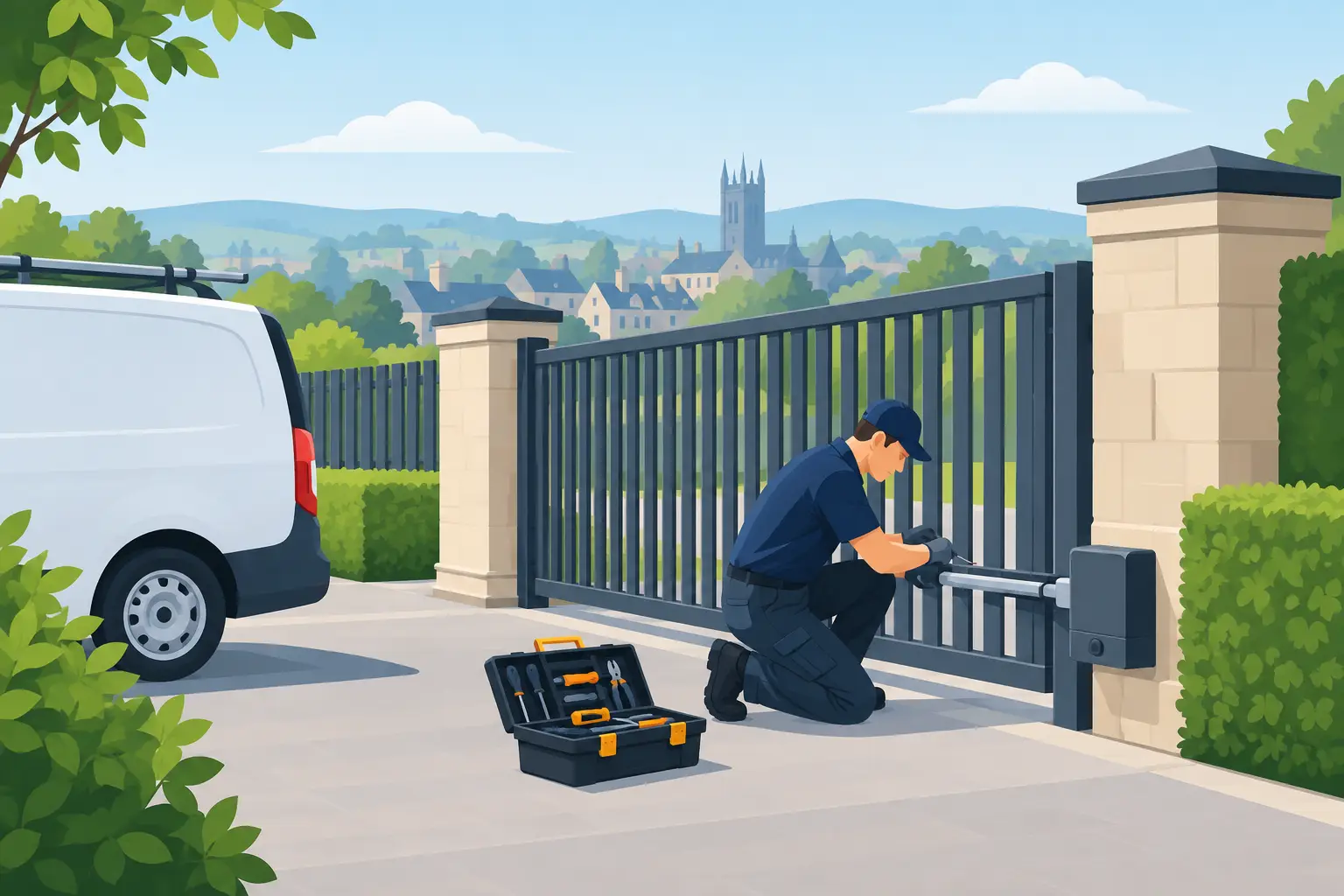
BlogA gate that stops halfway through its travel, opens without authorization, or will not respond on a wet morning is more than an inconvenience. It can leave a family driveway exposed, delay deliveries, disrupt staff access, or create a safety concern at a busy site. Professional gate automation repairs and maintenance in Cheltenham and Gloucestershire help keep the entrance to your property secure, controlled, and ready to operate when you need it.
Automated gates are hardworking mechanical and electronic systems. Motors, control panels, safety devices, cabling, hinges, remote controls, keypads, intercoms, and access-control equipment must all work together. When one component begins to fail, the cause is not always obvious from the gate’s behavior. A professional assessment identifies the fault properly and helps prevent a small issue becoming a costly outage.
When an Automated Gate Needs Attention
Some gate faults are immediate and obvious. The gate may not open or close at all, move only a short distance, make an unusual noise, or trip the power supply. Other warning signs are easier to overlook, such as a gate that moves more slowly than usual, only works from one remote, reverses unexpectedly, or needs repeated attempts to activate.
For homeowners, these problems can affect daily access and the protection of vehicles, gardens, and family members. For commercial properties, industrial yards, healthcare facilities, and managed sites, a failed gate can create much wider operational issues. Staff may be unable to enter, visitors may wait outside the premises, and a gate left open to keep traffic moving can compromise site security.
Safety faults require prompt attention. Automated gates should stop or reverse when a person, vehicle, or obstacle is detected. If safety edges, photocells, force settings, or emergency release mechanisms are not operating as intended, do not continue using the system as normal. Isolate the gate where practical and arrange an inspection by an experienced technician.
Common Causes of Gate Automation Failures
The problem may be electrical, mechanical, environmental, or a combination of all three. This is why replacing a remote control or resetting the system is not always the answer.
Power supply issues are a frequent cause of callouts. A tripped breaker, damaged cable, failed transformer, water ingress, or a problem with the control board can prevent the operator from receiving stable power. Battery backup units can also degrade over time, leaving the gate unreliable during a power outage.
Mechanical wear is equally common. Swing gates depend on correctly aligned hinges and posts, while sliding gates need a clear, level track and correctly engaged rack. Loose fixings, worn rollers, damaged gear racks, ground movement, and poorly aligned leaves add resistance to the system. The motor then works harder than it should, which can lead to further damage.
Safety devices and access equipment can also be responsible. Dirty or misaligned photocells may stop a gate closing. A damaged safety edge can trigger a false obstruction. Problems with keypads, fobs, GSM dial-in units, video intercoms, vehicle loops, or Paxton access control can make a fully functioning gate appear faulty because it is not receiving the correct command.
Cheltenham and Gloucestershire weather adds another practical consideration. Persistent rain can expose weak seals or water-damaged underground connections. Leaves, gravel, ice, and mud can obstruct sliding gate tracks and photocells. Regular checks after severe weather are particularly worthwhile for rural entrances, long driveways, and exposed commercial sites.
What Professional Gate Repairs Should Include
A proper repair starts with diagnosis, not guesswork. The technician should check the gate’s movement by hand where safe, inspect the operator and control equipment, test safety devices, and look for signs of mechanical resistance or damaged wiring. They should also confirm that the gate is correctly set up for its size, weight, and use.
The repair itself depends on the fault. It may involve replacing a worn motor component, repairing damaged cabling, reprogramming a control panel, realigning photocells, fitting new remote controls, servicing hinges or rollers, or correcting the gate’s travel and force settings. On older systems, a replacement control board or a targeted upgrade may offer better value than repeated repairs.
The best approach depends on the equipment already installed and the condition of the gate structure. A quality automation operator cannot compensate for a badly sagging gate leaf, a corroded track, or unsuitable foundations. Equally, replacing an entire gate system is not always necessary when a well-built installation only needs a new safety device, motor part, or control upgrade.
JP Security works with established gate automation manufacturers including BFT, CAME, DEA, and FAAC, alongside the intercom and access-control technologies that often support automated entrances. That multi-system knowledge matters when the fault sits between the gate operator, an intercom, a keypad, or a wider security system.
Why Routine Maintenance Protects Your Investment
Repairs restore operation after something has gone wrong. Maintenance is designed to reduce the chance of that failure happening in the first place. It is particularly valuable for gates used several times a day, shared residential entrances, business yards, apartment developments, schools, retail sites, and any location where reliable vehicle access is essential.
During a maintenance visit, a technician can inspect the physical condition of the gate and test the automation equipment under normal operating conditions. They can identify loose hardware, early signs of corrosion, worn moving parts, damaged cables, contaminated photocells, declining backup batteries, and settings that no longer reflect how the gate is being used.
A thorough service should also include safety testing. Photocells, safety edges, emergency stops, manual release systems, and obstacle detection must be checked so the gate responds appropriately. This is not simply a convenience check. A poorly maintained automated gate can present a serious risk to people, vehicles, and property.
Maintenance frequency depends on the gate type, traffic level, age, site environment, and the consequences of downtime. A private driveway gate with light use may need an annual service. A commercial barrier or sliding gate used throughout the day may benefit from more frequent planned inspections. There is no one schedule that suits every property, which is why maintenance should be tailored to the site.
Simple Checks Property Owners Can Make
Owners and site managers do not need to dismantle an operator or alter safety settings. However, regular observation can help identify issues before the gate fails completely. Watch for slow movement, grinding sounds, jerking, sagging, inconsistent stopping points, damaged signage, water around cabinets, or vehicles repeatedly catching a gate or track.
Keep the immediate operating area clear. Sliding gate tracks should be free from stones, leaves, and compacted debris, while photocells need an unobstructed line of sight. Never bypass a safety device to keep a gate moving. A temporary workaround can create a larger repair bill and, more importantly, put people at risk.
It is also sensible to keep a record of faults, power cuts, remote-control problems, and accidental impacts. For landlords, facilities managers, and business owners, this information gives the technician a clearer picture of a recurring issue and supports a more efficient repair visit.
Repairs, Upgrades, and Integrated Security
An unreliable gate is sometimes a sign that the property has outgrown its original access system. A single remote-controlled gate may be suitable for a private home, while a busy commercial entrance may need video verification, timed access permissions, staff credentials, vehicle detection, or audit trails.
Upgrading does not always mean replacing the gate automation. In many cases, adding a video intercom, GSM entry system, keypad, safety equipment, or access-control platform can give the owner better control while retaining a serviceable motor and gate structure. For sites with CCTV, alarms, barriers, or multiple access points, integrating systems can make day-to-day management easier and strengthen the overall security plan.
For a home, the priority may be seeing and speaking to visitors before opening the gate from inside. For a business, it may be ensuring only authorized staff, contractors, and deliveries gain access. The right solution starts with how the entrance is used, who needs access, and what happens if the gate is unavailable.
If your gate is showing early warning signs or has already stopped working, arranging a professional inspection is a practical way to protect access to your property. Speak to a local expert before a minor fault leaves your home, staff, vehicles, or premises exposed.
