
 Blog
BlogA gate that opens for everyone is not much of a security boundary. Whether you are protecting a family driveway in Cheltenham, a managed apartment block in Gloucester, or a busy commercial yard elsewhere in the county, access control solutions for my electric gate or barrier in Cheltenham and Gloucestershire should give the right people convenient entry while keeping everyone else outside.
The best choice is rarely just a matter of fitting a keypad or handing out remotes. It depends on who needs access, how often they come and go, whether you need to identify visitors before entry, and what happens when a device is lost, damaged, or no longer authorized. A professionally designed system brings those decisions together with the gate, barrier, intercom, and wider security setup.
Start with how people and vehicles use the entrance
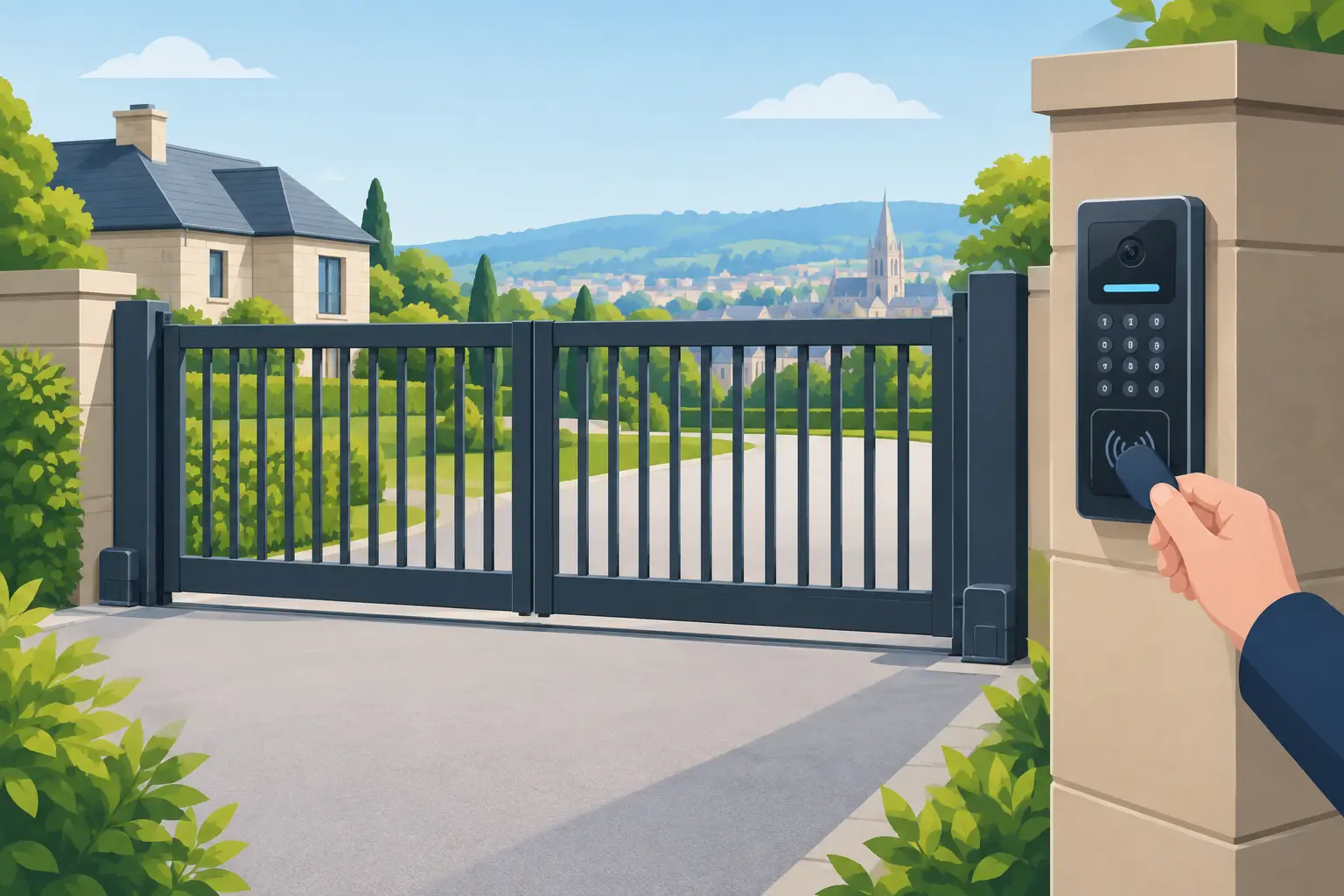
A private home usually needs a simple, dependable way for household members to enter, plus a safe method for visitors, deliveries, and tradespeople to call. A video intercom at the gate can be particularly useful here. It lets you see and speak to a caller before releasing the gate, whether you are in the house or away from the property when the system is configured for remote access.
Commercial sites have different pressures. Staff may arrive in shifts, suppliers may need timed access, and a facility manager may need to remove permissions quickly when an employee leaves. For a car park or industrial entrance, the entrance also needs to keep traffic moving without allowing tailgating or unauthorized vehicles through.
Before selecting equipment, consider the daily reality: the number of users, the distance from gate to building, mobile signal or network availability, visitor volumes, operating hours, and the level of audit trail required. These details determine whether a straightforward remote-control system is enough or whether a managed access platform is a better investment.
Access control solutions for electric gates and barriers
There is no single access method that suits every property. The most effective installations often combine two or more methods so residents, staff, visitors, and emergency services have an appropriate route in.
Keypads for controlled everyday entry
A keypad gives authorized users entry with a PIN. It is a practical option for a small office, rental property, service entrance, or household where several people need access but issuing remotes would be inconvenient. A keypad can also support separate codes for different users or contractors, depending on the equipment selected.
The trade-off is that codes can be shared, observed, or forgotten. Codes should be changed when a contractor’s work ends or a staff member leaves. For higher-security premises, a keypad is often better as a second factor alongside a fob, card, or intercom release rather than the only form of access.
Remote controls and long-range vehicle entry
Remote controls remain a popular choice for residential electric gates because they are quick and familiar. A driver can operate the gate without leaving the vehicle, which is useful during poor weather or late-night arrivals. They are also well suited to smaller sites with a stable group of users.
However, every remote is another item to manage. If one is lost, the receiver may need to be reprogrammed to prevent it being used. For a larger site with changing staff or tenants, individually managed credentials can be easier to control than a growing collection of remotes.
Video and audio intercoms for visitors
An intercom creates a decision point at the entrance. Audio systems allow a visitor to call the property, while video systems add visual verification. This is valuable for homeowners receiving deliveries and for offices, healthcare settings, and retail premises where staff need to confirm who is requesting entry.
A video intercom should be positioned to give a useful view of the caller, not simply a view of the top of their head or a car windshield. Lighting, cable routes, gate position, and the likely approach of pedestrians all matter. When paired with CCTV coverage, it can provide a clearer picture of activity at the entrance and driveway.
Cards, fobs, and Paxton-managed access
For organizations that need greater control, proximity cards and fobs provide a tidy, manageable option. A credential can be assigned to an individual and canceled when it is no longer needed, without changing a shared code or recovering every remote control. This is particularly helpful for offices, schools, apartment developments, warehouses, and sites with multiple access points.
Paxton access control can support permissions based on people, doors, gates, and schedules. A manager may allow daytime access for staff, limit contractor access to specific hours, or maintain a record of entry activity where required. The right design depends on the size of the site and how much administration the customer wants to handle.
GSM and smartphone-based entry
GSM intercoms and app-based controls can be a strong choice where users need to answer calls or release a gate from a phone. They can suit rural homes, gated developments, and unmanned entrances, provided signal strength and system configuration are carefully checked.
Convenience should not override security. Phone numbers and app permissions must be kept current, and the installer should consider what happens during power loss, a network outage, or a change of ownership. A local manual release and a planned emergency access method are sensible safeguards.
Match the control method to the level of risk
A driveway gate protects privacy and provides a visible deterrent, but it may not need the same access rules as a pharmaceutical store, hospital service yard, or industrial compound. Higher-risk sites often benefit from layered control: a barrier for vehicle management, gates or fencing for the perimeter, monitored CCTV, and controlled pedestrian access.
For example, a busy commercial car park may use a barrier with proximity readers for staff and an intercom for approved visitors. A residential property may combine remote gate operation with a video intercom and driveway cameras. A managed block may need individual resident credentials, a timed trades code, and a clear process for revoking access when tenancies change.
The aim is not to make entry difficult for legitimate users. It is to ensure that access is deliberate, visible, and accountable.
Do not overlook gate safety and reliability
Access control only works well when the gate or barrier itself operates safely. Automated gates need suitable safety devices, such as photocells and safety edges, positioned and tested for the layout. Force settings, manual release arrangements, warning signs, and routine inspections all play a part in protecting people, vehicles, and the equipment.
Existing systems can often be upgraded rather than replaced. An older gate operator may still be serviceable while its outdated receiver, keypad, intercom, or control panel is replaced with a more suitable option. Equally, a recurring fault may point to an issue with power supply, underground cabling, hinges, track condition, or safety devices rather than the access controller alone.
This is why an on-site assessment is worthwhile. The installation needs to account for the gate type, whether it swings or slides, the available power and network connection, drainage, vehicle approach, and the condition of current equipment.
Build access control into the wider security plan
An entrance is usually the first place an intruder, visitor, customer, or delivery driver encounters your property. Integrating it with CCTV, alarms, lighting, and intercoms can improve both security and day-to-day management. A camera covering the approach can help verify callers; a monitored alarm can protect buildings after the gate is closed; properly planned cabling reduces avoidable connection problems.
With 37 years of experience across gate automation, barriers, intercoms, CCTV, and Paxton systems, JP Security can assess the whole picture rather than treating the gate as an isolated piece of equipment. That matters when a property has multiple entrances, different user groups, or equipment from established manufacturers that needs repair or modernization.
Choose a system you can manage after installation
The right solution is one that remains practical six months and five years later. Ask who can add or remove users, how lost fobs and remotes are handled, whether permissions can be scheduled, and what maintenance the gate, barrier, and safety equipment need. Keep a simple record of issued credentials and review access after staffing, tenancy, or household changes.
A well-planned entrance gives you more than an automated gate opening on command. It gives you confidence that family members, staff, customers, vehicles, and approved visitors can enter safely, while control stays firmly with the people responsible for the property.
