
 Blog
BlogA gate is only as secure as the steelwork holding it in place. Loose hinges, cracked posts, thin infill panels, or poorly aligned leaves can turn an otherwise well-protected driveway, yard, or commercial entrance into a weak point. When arranging gate fabrication and mobile welding in Kidderminster, the goal should be more than making a gate look finished. It should create a dependable boundary that works properly, supports the intended access controls, and stands up to daily use.
For homeowners, that may mean protecting vehicles, family privacy, and a side entrance. For business owners and site managers, it can mean controlling deliveries, limiting unauthorized vehicle access, and protecting staff, stock, or equipment. The right solution depends on the opening, the surrounding structure, traffic levels, and whether automation or access control is part of the plan.
What Good Gate Fabrication Should Deliver
Fabrication starts with the practical realities of the site. A gate must suit the width and slope of the entrance, the available space for opening, ground conditions, and the strength of existing walls, pillars, or steel posts. A well-made gate that is fitted to inadequate supports will still sag, bind, or become difficult to secure.
For a residential property, a fabricated steel swing gate may be the right answer where there is enough clear space behind the entrance. Sliding gates are often more suitable for wider driveways, busy premises, or locations where swing clearance would obstruct a road, footpath, or parking area. Pedestrian gates need the same care, particularly where they form part of a perimeter fence or connect to an intercom system.
The appearance matters, but it should not lead the decision. Open-bar designs provide visibility and can complement CCTV coverage, while solid or partially clad gates offer greater privacy. Ornamental features can be added, yet they should not create climbing points or compromise the gate’s overall strength. The best designs balance the look of the property with security, visibility, and safe operation.
Materials, finish, and long-term maintenance
Mild steel remains a common choice because it can be fabricated for a wide range of designs and repaired effectively when damage occurs. However, raw or poorly coated steel will corrode. Preparation and finishing are therefore part of the security decision, not simply a cosmetic extra.
Galvanizing and a suitable powder-coated finish can offer strong protection against weathering, particularly on exposed driveways and commercial sites. The appropriate finish depends on the gate’s location, expected wear, and desired appearance. Regular checks still matter. Paint chips, trapped moisture around joints, and early surface rust are far easier to deal with than extensive corrosion around hinges, rails, or structural welds.
When Mobile Welding Is the Practical Choice
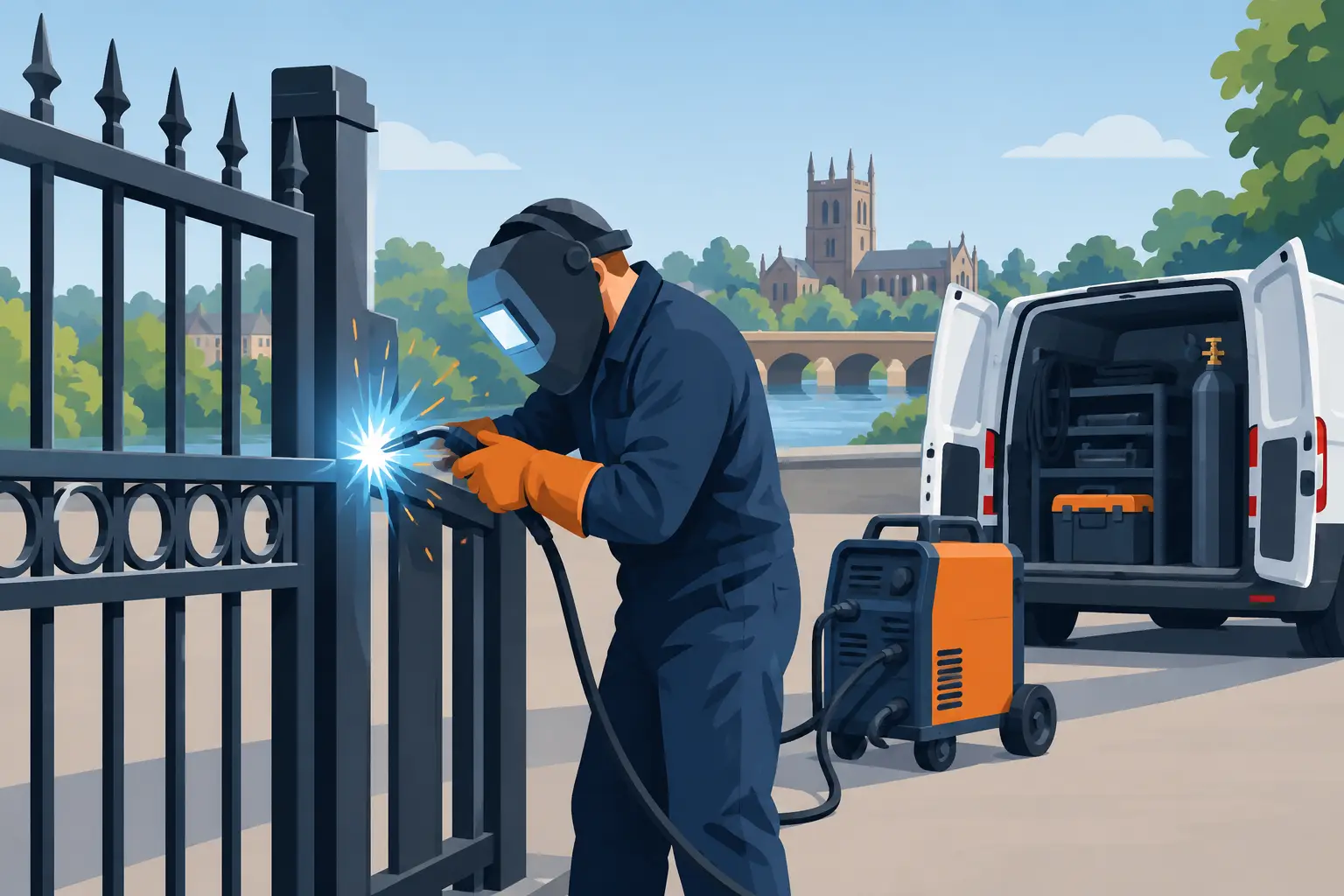
Not every gate problem requires a replacement. Mobile welding can be an efficient option when a steel gate, railing, post, bracket, or hinge assembly has been damaged but the wider structure remains sound. Bringing the work to the property can avoid removing large, heavy gate leaves and reduce disruption at a home or operating site.
Common repairs include cracked welds at hinge points, damaged bottom rails, impact damage from vehicles, loose posts, broken latch plates, and brackets that no longer support an automated gate motor correctly. On commercial and industrial premises, repeated contact from delivery vehicles, forklifts, or machinery can put particular stress on entrance steelwork.
A proper assessment should establish why the failure happened. Welding a cracked hinge back into place without addressing a leaning post, a gate that is too heavy for its hardware, or an automation arm pulling out of alignment may only provide a short-term fix. Repairs should restore the gate’s strength and movement while identifying whether new hinges, reinforcement, realignment, or replacement components are required.
Mobile work also has limits. Severe corrosion, distorted gate frames, unstable masonry, or a badly compromised support structure may make replacement the safer and more cost-effective option. A professional will be clear where a repair is appropriate and where it would merely postpone a larger problem.
Planning for Gate Automation and Access Control
Fabricated gates are often installed first and automated later. That can work, but automation should ideally be considered during the design stage. The gate’s weight, hinge arrangement, travel path, stopping position, and support posts all affect the type of operator that can be fitted safely.
An automated gate needs more than a motor. It requires correctly placed safety devices, reliable power, suitable controls, and a layout that reduces trapping and impact risks. Photocells, safety edges, warning devices, manual release arrangements, and well-positioned limit settings all play a part. A gate that looks straightforward can become unsafe if its operation has not been designed around people, vehicles, pets, and visitors using the entrance.
Access control should match how the property is used. A homeowner may prefer a video intercom and remote opening from a phone or internal monitor. A shared development may need keypads, fobs, or resident call points. Commercial properties may benefit from controlled staff credentials, timed permissions, vehicle barriers, or an intercom at the delivery entrance.
The steelwork and electronic security should work together. For example, a camera should give a clear view of the approach and gate line, while an intercom should be positioned where visitors can safely stop without blocking traffic. Cable routes should be protected and planned before surfaces are finished. Retrofitting is possible, but early coordination usually produces a neater, more reliable result.
Security Details That Are Easy to Miss
The most visible part of a gate is rarely the most vulnerable. Hinge security, latch protection, lock positioning, and the condition of the surrounding fence or wall all deserve attention. A strong gate can be bypassed if a person can reach over, lift it from exposed hinges, force a weak catch, or enter through an adjacent damaged panel.
For manually operated gates, choose locking hardware that suits the gate’s use. A pedestrian gate may need a secure latch combined with controlled entry, while a driveway gate may need drop bolts, a lockable center point, or ground catches to prevent movement in high winds. Emergency access and fire safety also need consideration, especially at commercial premises and multi-occupancy properties.
Visibility is another trade-off. Solid panels can improve privacy, but they may block sightlines from the home, reception area, or CCTV cameras. Open designs can make surveillance easier and act as a visible deterrent, although they reveal more of the property. There is no universal answer. The right balance comes from the specific risks at the entrance and how the site is monitored.
Choosing a Contractor for Gate Work in Kidderminster
Ask how the contractor will assess the opening, posts, gate weight, and intended use before work begins. A clear proposal should explain the gate type, material, finish, locking or automation provisions, and any repairs needed to make the installation safe. For mobile welding, it should also identify the affected area and whether the repair addresses the cause of the damage.
Experience with automated gates is particularly valuable when fabrication and security systems meet. Gate movement, electrical controls, access permissions, and safety devices should not be treated as separate jobs with no overall responsibility. A coordinated approach helps prevent avoidable faults, poor alignment, and security gaps.
It is also sensible to discuss future servicing. Hinges need lubrication, moving parts need inspection, safety devices need testing, and steel finishes need attention before corrosion spreads. A gate that receives basic planned care is less likely to fail when access matters most.
A secure entrance should feel simple to use every day. Whether you need a new fabricated gate, on-site welding after damage, or a design prepared for automation, start with the condition of the structure and the people it needs to protect. That foundation gives you a gate that does its job quietly, reliably, and safely for years to come.
