
 Blog
A gate that only opens after several presses, stops halfway across the driveway, or leaves staff waiting at an entrance is more than an inconvenience. It can affect daily access, vehicle security, and the safety of everyone using the site. For FAAC gate automation remotes and repairs in Cheltenham and Gloucestershire, the right answer starts with identifying whether the fault lies with the remote, the gate operator, the safety devices, or the power supply.
FAAC systems are widely used on residential driveways, commercial yards, apartment developments, and controlled parking areas because they offer dependable automation when specified, installed, and maintained correctly. Like any mechanical and electronic system, however, they need occasional attention. A worn remote battery may be a simple fix; an intermittent gate may point to a safety photocell, damaged cabling, a control-board fault, or a gate that has moved out of alignment.
FAAC Gate Automation Remotes in Cheltenham
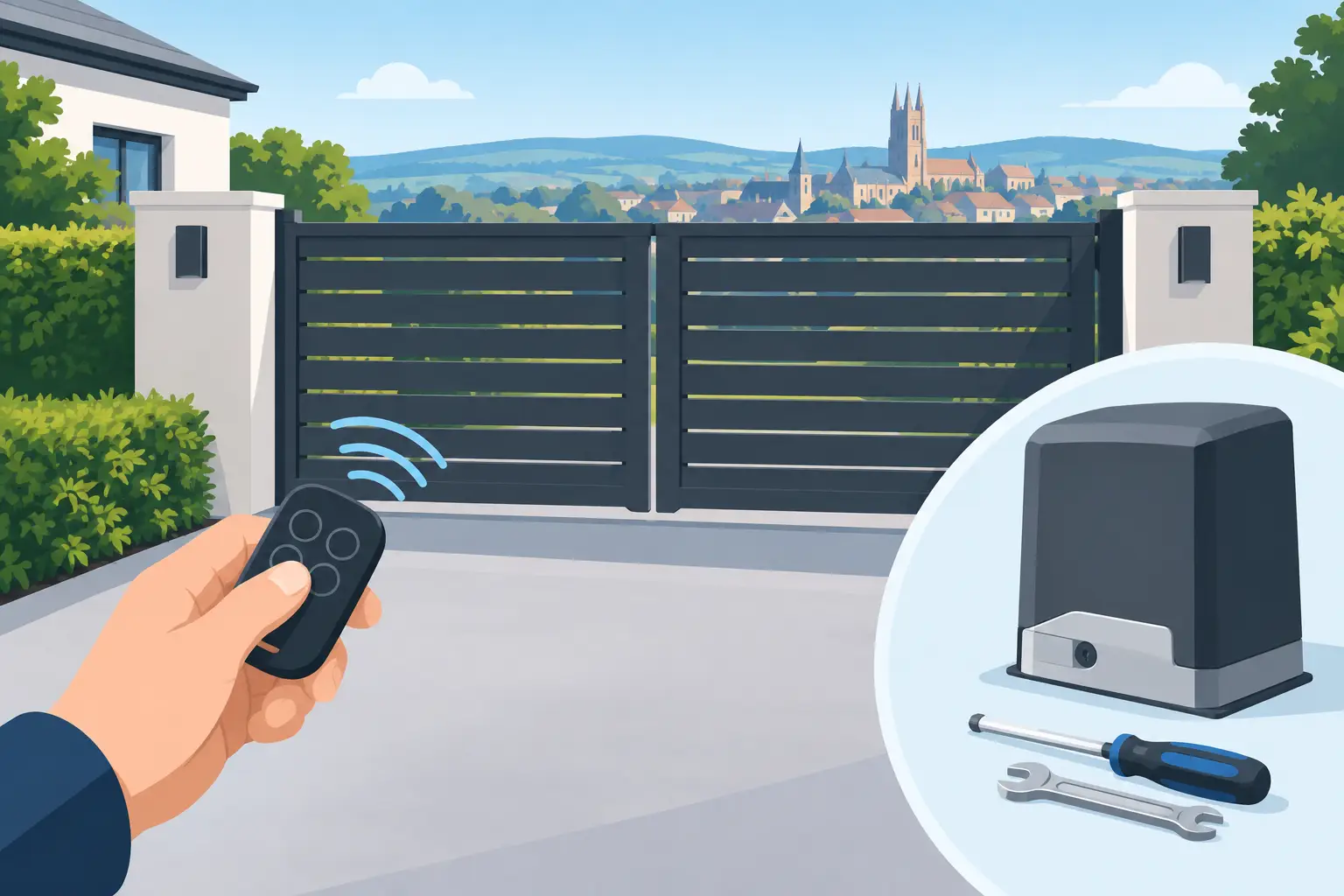
A FAAC remote control should give you convenient, controlled access without leaving your vehicle. Depending on the receiver and system setup, one handset can operate a sliding gate, swing gates, garage door, or barrier. For homes, this means a more secure arrival and departure. For businesses and managed sites, it makes it easier to issue access to approved staff, tenants, contractors, or delivery vehicles.
Not every FAAC remote is interchangeable. The correct replacement depends on the receiver fitted to the automation, the frequency and coding type, and whether the system uses rolling-code technology. A rolling code changes after each authorized use, which helps reduce the risk of a copied signal being used to gain access.
This is why purchasing a generic handset without checking compatibility can create problems. It may not program correctly, may have reduced range, or may lead to an insecure arrangement if the existing receiver has been altered in the past. A professional can identify the equipment already installed and supply, program, and test a suitable remote control.
When a Remote Stops Working
Start with the simple possibilities. Replace the battery with the correct type and check whether another authorized remote operates the gate. If other remotes work normally, the issue may be limited to the handset or its programming. If none of them work, the cause is more likely to be the receiver, power supply, control panel, or a safety condition preventing the gate from moving.
Reduced range can also be a useful clue. If you need to be very close to the gate before it responds, the handset battery may be weakening, but interference, a damaged receiver aerial, or poor receiver positioning can also be responsible. On a busy commercial site, this should be investigated rather than worked around, particularly where drivers are tempted to wait in an unsafe position while trying repeatedly to enter.
If a remote has been lost or stolen, access should be reviewed promptly. Deleting the missing transmitter from the system and programming replacement remotes protects the property more effectively than hoping the lost handset is never found. For sites with frequent staff turnover, a coded keypad, video intercom, or managed access-control system may be a better long-term option than relying solely on shared remotes.
Diagnosing FAAC Gate Repairs Properly
A gate operator is only one part of the system. Gates also rely on sound hinges, tracks, rollers, racks, limits, cabling, safety photocells, control equipment, and an appropriate power supply. A repair that focuses only on the motor can miss the condition that caused the fault in the first place.
For example, a sliding gate that becomes difficult to move because debris has collected in the track, the wheels are worn, or the gate has been struck may overload the operator. Repeatedly resetting the control panel without correcting the mechanical issue can lead to further damage. A swing gate can behave similarly if hinges are binding, an underground operator is affected by water ingress, or a gate leaf has dropped out of position.
Common FAAC repair callouts include gates that fail to open or close, stop unexpectedly, reverse before reaching the closed position, operate only in one direction, or make unusual noise during travel. Some faults are intermittent, especially where moisture has reached connections or a photocell is misaligned in bright sunlight. A technician should test the system under normal operating conditions, inspect the mechanical movement, and check that safety devices respond as intended.
Safety Devices Are Not Optional Extras
Photocells, safety edges, emergency release mechanisms, warning lights, and force settings all have a role in making automated gates safer to use. If a gate closes on an obstacle, fails to stop when a photocell beam is broken, or has visibly damaged safety equipment, take it out of normal use until it has been inspected.
Do not bypass photocells or bridge terminals to make a gate move. This can create a serious risk to people, pets, vehicles, and property, while masking the underlying fault. It may also leave a business or property manager exposed if an incident occurs.
A manual release is useful during a power outage or equipment failure, but it should be operated only by someone who understands the procedure and can secure the gate afterward. On a shared or commercial site, it is sensible to decide in advance who has release access and what the process is if the entrance cannot be secured.
Repair, Upgrade, or Replacement?
The best decision depends on the age and condition of the gate, not just the first visible problem. A replacement remote and receiver can be sensible where the gate is mechanically sound but older controls are no longer reliable or secure. Replacing photocells, improving cable protection, or adding a video intercom may extend the useful life of a capable FAAC operator.
In other cases, repeated faults point to a wider issue. If the gate structure is badly corroded, the track is uneven, the operator is undersized for the gate weight and usage, or obsolete components are no longer readily supported, an upgrade may offer better value than a cycle of callouts. High-traffic entrances need equipment designed for their duty cycle. A driveway gate used a few times a day has very different demands from a warehouse entrance used by vans, staff, and deliveries throughout the day.
An upgrade is also an opportunity to improve how access is managed. Homeowners may choose a video intercom so they can see and speak to visitors before releasing the gate. Property managers may need separate controls for residents, visitors, and service vehicles. Businesses may benefit from keypad codes, fobs, intercoms, vehicle loops, or access control that can be changed when roles or personnel change.
What a Professional FAAC Service Visit Should Cover
Effective repair work is more than arriving with a replacement part. The technician should establish the fault, inspect the gate’s physical movement, check controls and wiring, and test the safety functions after work is complete. Where a component has failed, the repair should address why it failed where possible, such as water entry, cable damage, poor alignment, or excessive strain on the operator.
For a residential property, this approach helps keep the driveway secure without turning a simple entry point into a daily frustration. For a commercial, industrial, healthcare, or retail location, it helps reduce disruption and provides a clearer record of what has been checked. Site operators should also consider whether the gate can be safely isolated and whether there is an alternative entry route while work is carried out.
JP Security works with FAAC equipment alongside other established gate automation manufacturers, allowing the system to be assessed on its condition and suitability rather than forcing a one-size-fits-all replacement. With 37 years of experience across Gloucestershire properties, the focus is on practical repairs, safe operation, and access arrangements that suit the people using the site.
Maintaining a FAAC Gate Between Service Visits
Regular observation catches many problems before they become a locked gate or an unsecured entrance. Keep sliding-gate tracks clear of leaves, stones, ice, and standing water. Watch for changes in movement, new noises, visible damage to cables or photocells, and gates that no longer line up cleanly when closed.
Avoid forcing the gate by hand while it is engaged with the operator, and do not adjust force settings, limit positions, or control-panel wiring unless you are qualified to do so. These settings affect how the gate detects resistance and where it stops. Small adjustments made without proper testing can create unreliable or unsafe operation.
A planned maintenance visit is particularly worthwhile for shared residential developments and busy commercial sites. It gives the system a scheduled inspection rather than waiting for a failure at the worst possible time. Keep a record of remotes issued, report faults early, and make sure the gate is treated as a security system that needs care, not simply a convenience at the end of the driveway.
When a FAAC gate no longer behaves as it should, a prompt professional assessment can restore dependable access while protecting the people, vehicles, and property behind it.
